Southeast Asia · Thailand
Bangkok
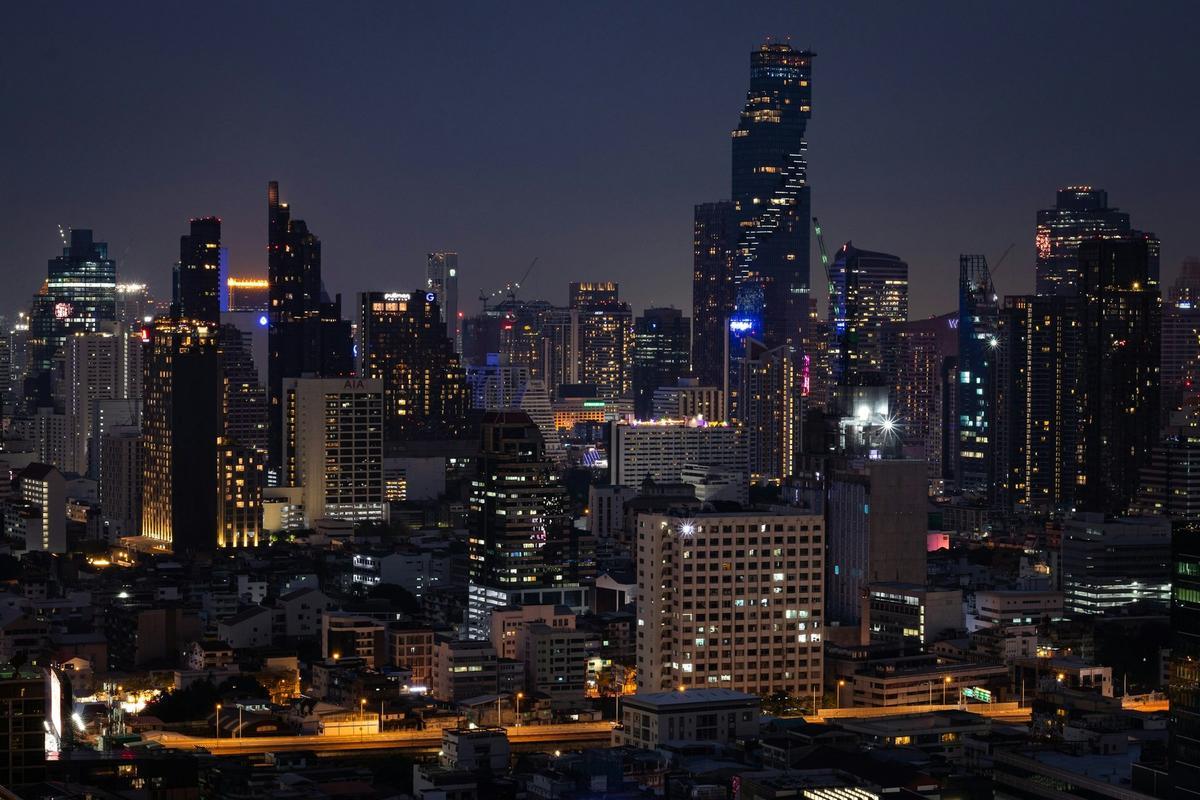
Bangkok delivers the expat's pragmatic wish list—healthcare above its price point, living costs that confound—at the cost of political latitude.
Solo $2,018/mo · Couple $2,889/mo · Data as of November 2026
Our estimate: energy and cuisine · Methodology
angkok sprawls across the Chao Phraya delta: a megacity whose daily cost of living sits well below comparable capitals in the region, with an unusually deep international-school market and a hospital sector that draws medical tourists from across Southeast Asia. English carries you through tourist corridors and wards; Thai runs the rest of daily life.
Bangkok suits remote workers who prize cost—daily life is affordable for a city of its scale. Healthcare-focused retirees find an unusually well-equipped hospital sector at a fraction of Western prices. Families have a deep international-school market; those drawn primarily by the food will find a culinary culture of obsessive, regional depth.
Civil liberties are materially constrained, and LGBTQ+ relationships face legal restriction that neither law nor social culture softens. The city compounds this with physical difficulty: Bangkok was not designed for pedestrians, air quality registers as a genuine downside in the drier months, and the water requires filtration. English outside tourist corridors and hospital wards demands real patience.
Find cities that fit you
A free quiz ranks all 343 cities against what matters to you.
Vibe and character
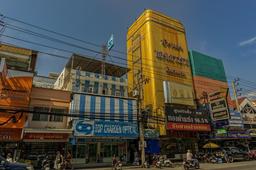
Bangkok runs at a pace that does not relent—loud and layered past midnight, anchored by cooking of spiced and shifting depth. Weekends pull toward islands and hill towns; a short-haul flight puts most of Southeast Asia within reach. The city does not do quiet.
Source: UNESCO · Methodology
City character
Our estimate: city character ratings · Methodology
Cost
$2,018 for a solo month puts Bangkok in the low cost band — a real cost advantage for the breadth of city on offer. The internal spread is wide: prime central rentals can run four to seven times the outside-of-centre equivalent, with meaningful budget flexibility through neighbourhood choice.
Source: Numbeo, collected November 2026, in our cost model · Methodology
These are recurring monthly costs. Moving itself — deposits, shipping, visas, flights, temporary accommodation — is not included, and it is usually the largest number in your first year. When grouped by region elsewhere on this site, North America covers the United States, Canada, and Mexico.
Monthly cost · by household
Priced for a Western-expat mid-range lifestyle — local-style living usually costs less.
All figures above are the Average lifestyle baseline for Bangkok — Western mid-range expat methodology, November 2026, line-by-line cost model. Want to model a different lifestyle? Use the widget below to swap household size, lifestyle tier, and quick toggles. It starts from the same Solo + Average baseline and diverges as you customize.
Run the full Cost Reality Check for Bangkok
Priced for your household and lifestyle tier, line by line. $79 one-time.
Where Bangkok sits globally
Sits in the lower band of corpus lifestyle costs.
Safety and rights
On personal safety Bangkok reads moderate at 62; expect to navigate around petty-crime hot zones in central districts but the broader pattern stays manageable. On the political and civil-liberties side: Freedom House rates Thailand 'Not Free', and ILGA classifies its legal landscape as 'restricted'.
Sources: Numbeo, collected November 2026 · ILGA World · Georgetown GIWPS, 2023/24 · Freedom House · Methodology
Climate
Bangkok sits in tropical savanna — no winter to speak of, with average highs from around 32°C in the coolest month to 36°C in April. The year divides into wet and dry — rainfall peaks around September (336mm), while the driest months see far less. Summer maxima cross 36°C in April, putting outdoor life beyond comfort for several weeks each year. Humidity sits very high year-round — air conditioning is operational infrastructure, not a comfort upgrade, and outdoor exertion stays heat-limited across most of the calendar.
Sources: WMO / NOAA NCEI, normals 1991–2020, published 2023, checked Oct 2026 · National meteorological services, checked Oct 2026 · ACAG SatPM2.5 (Washington University in St. Louis), 2021–2023 · Methodology
Our estimate: winter rating · Methodology
12-month temperature and rainfall
April delivers the year's hottest average highs at 36°C; September the wettest at 336 mm.
Season by season
Coolest months · Jan · Oct · Dec
The coolest stretch of the year — average highs around 32°C.
Hottest months · Mar–May
Peak heat — average highs around 36°C. Outdoor activity tends to shift to mornings and evenings.
Wettest months · Aug–Oct
The heaviest rainfall of the year — about 336 mm in the wettest month.
Healthcare
Bangkok's leading hospitals cover a broad clinical range. Quality at the leading hospitals is excellent, English-medium care is reliably available in the private sector, and access runs through the country's health system.
Source: international insurers, 2024 · Methodology
Our estimate: healthcare quality and English-medium care · Methodology
Local insurance runs $152 a month for basic cover, with international-portable plans priced higher; out-of-pocket costs remain below US private equivalents.
The public system covers Thailand citizens through a national programme — foreign residents can access government hospitals at point-of-use rates, but in practice most expats opt out. The practical expat pattern is private for daily medicine, with the public sector kept as a backstop for emergencies or specific procedures. Portable international cover runs at a fraction of US, UK, or Western European pricing — competitive options for the holder wanting global access.
Systems, insurance and prescription rules are set nationally, not city by city. How healthcare abroad actually works
The quiz weights healthcare quality against your other priorities — climate, cost, language — to show where Bangkok stands. Get the full ranking · $99
Practical
Daily life in Bangkok moves easily — walking or transit carries most daily trips, with limited frictions. Public transit is strong — solid network coverage across the city with reliable service. Walking is functionally not viable as a daily mode — distances are large and the urban form is built around vehicles. Tap water in Bangkok is generally filtered or replaced with bottled water for drinking — household water systems typically include a filter or dispenser.
Sources: OpenStreetMap contributors · EF EPI · Methodology
Our estimate: visa and admin, Western digital services · Methodology
Language
Thai is the main language of Bangkok, and population English proficiency is rated Very Low — the gap between the EF measurement and the expat experience is wide, particularly in business and tourism contexts. Practical English in Bangkok is minimal — the gap between expat-facing infrastructure and the broader population is wide on language. Thai ability is operationally critical for multi-year residents — without it, daily life remains constrained to international-facing infrastructure.
Mobility and connectivity
Walking essentially doesn't function in Bangkok as a daily mode — a walkability estimate of 28 captures the gap between the city's scale and its pedestrian-friendliness. At transit score 70, Bangkok's public transport handles daily mobility without need for private vehicle — coverage extends across the urban area, and reliability is high. At $5 per typical trip, ride-hailing in Bangkok runs cheap relative to Western markets and supports use as a default rather than emergency mode.
Transit scores count only transit with its own dedicated right-of-way — metro, elevated and underground rail, trams on dedicated lines, and fully separated busways (BRT). Buses and trams sharing regular car lanes don’t count, however frequent.
Visa pathways
Thailand's long-stay visa landscape is structured but navigable. The Destination Thailand Visa suits remote workers who can demonstrate overseas income and sufficient savings; the Long-Term Resident Visa targets higher-earning professionals with a qualifying employment record. Retirees have a clear path through the Non-Immigrant O-A, which requires a Thai bank deposit and health cover. Visa-free entry has recently been tightened.
Visa pathways and admin ratings shown here are for the principal applicant — spouse and dependant work rights vary by pathway; check the linked official source before relying on them.
Minority faith infrastructure
Mosques — many · Synagogues — few · Buddhist temples — very many · Hindu temples — many.
We record mosques, synagogues, Buddhist temples and Hindu temples — the ones hardest to assume from a country's majority religion — and show whichever are present here. Christian places of worship are not recorded; in most of the corpus they are the default rather than the question.
The quiz weights admin complexity against your situation to show where Bangkok stands. Get the full ranking · $99
Schools
Bangkok carries one of the deepest international-school markets in the corpus — 103 schools, of which 13 carry an IB programme, built up over decades to serve a heavily expat-driven family demographic. International tuition runs $30,408 a year on average — top-band pricing across the cities we cover, with the cost of school fees forming a substantial share of total family budget.
Our estimate: school counts · Methodology
Tuition: schools’ published fee schedules, checked Nov 2026
Bangkok's international-school market is among the deepest in Southeast Asia — 103 schools cover essentially every expat curriculum need at substantial capacity. Bangkok's 103 international-curriculum schools cover every major curriculum globally — British, American, IB, French, German, Australian, and a long tail of Continental-European and Asian options, of which 13 carry an IB programme. International tuition runs $30,408 a year on average — sits at the top of the global expat-school market, with elite institutions running well above and family budgets planning accordingly.
Below the international tier sits a substantial bilingual market — Thai-English schools that mix curricula and run at a meaningful discount, often the right call for families planning to stay long-term and integrate. Local private schools and religious-foundation schools offer further price steps down. Bangkok's depth means most family profiles — from short-term international rotators to long-stay families with regional ambitions for their children — find a fit; the question is usually budget calibration rather than availability.
The quiz weights school availability against your other priorities — climate, cost, language, healthcare — to rank Bangkok against other cities with comparable school depth. Compare the free and full quiz
Sources
- Numbeo, collected November 2026, in our cost model: monthly costs, cost rank
- WMO / NOAA NCEI, normals 1991–2020, published 2023, checked Oct 2026: climate type and temperatures
- Numbeo, collected November 2026: safety index
- Freedom House: political freedom
- EF EPI: English proficiency
- UNESCO: World Heritage sites
- ILGA World: LGBTQ+ rights
- Georgetown GIWPS, 2023/24: women’s safety
- National meteorological services, checked Oct 2026: muggy months
- ACAG SatPM2.5 (Washington University in St. Louis), 2021–2023: air quality
- international insurers, 2024: health insurance
- OpenStreetMap contributors: walk and transit scores
Data last reviewed October 2026
The Bangkok decision pack.
Includes Find My City (every city that clears your non-negotiables, ranked) and the Cost Reality Check for Bangkok. One-time payment.
Similar to Bangkok
Our estimate: food and weekend chips · Methodology
Find cities that fit you
A free quiz ranks all 343 cities against what matters to you.