Eastern Europe · Hungary
Budapest
Budapest pairs the bones of a great European capital with a political culture that treats civil liberties as a privilege, not a guarantee.
Solo $2,806/mo · Couple $4,115/mo · Data as of November 2026
Our estimate: energy and cuisine · Methodology
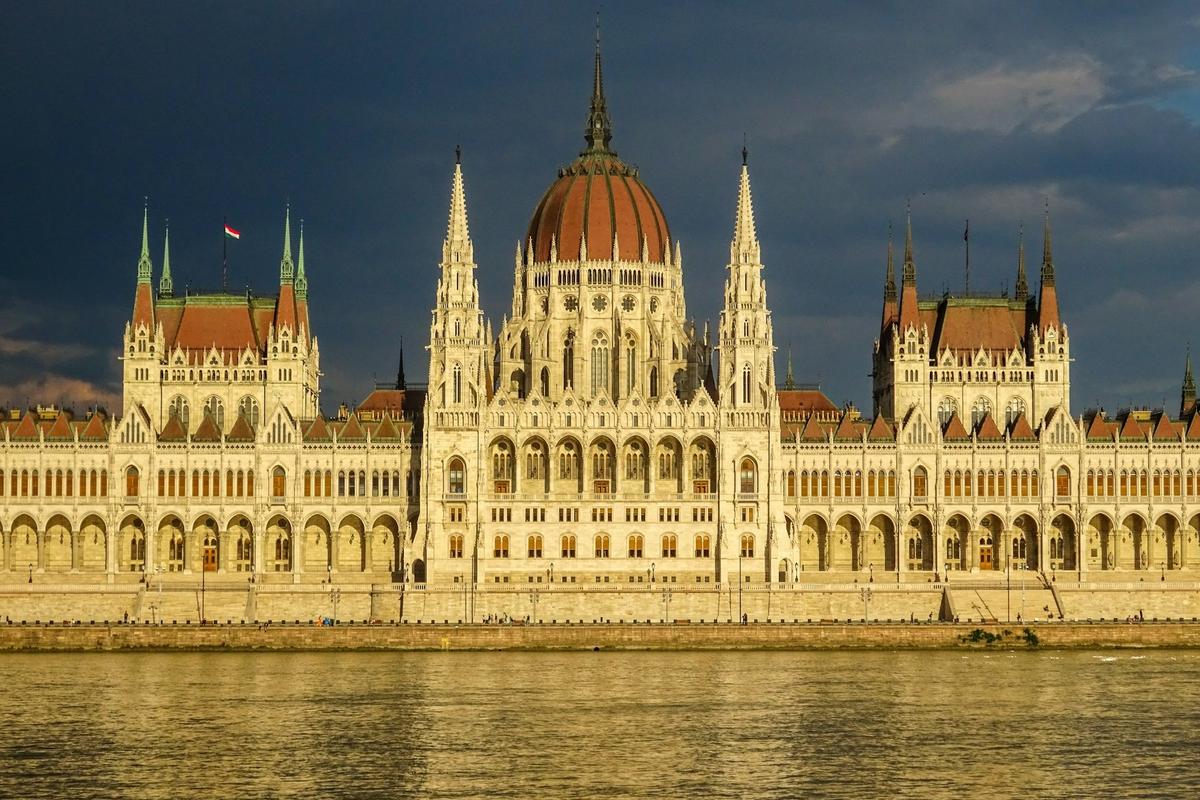
udapest straddles the Danube between its hilly western bank and the flat eastern plain, a Central European capital that stays affordable by EU standards. English carries well beyond the tourist core, and healthcare holds across public and private systems. Winters run long and cold—the city's thermal bath circuit is less a luxury than a seasonal habit.
Budapest rewards remote workers who want an EU address without the western price premium—English approaches native-level across the professional class. Cultural travellers find a calendar dense with classical music, major exhibitions, and nightlife that runs past any reasonable hour. International schooling is workable for families here.
The more loaded question is political. Hungary's civic freedoms are unevenly protected, with press freedom materially limited and legal recognition absent for LGBTQ+ relationships—constraints that land differently depending on who is moving. Air quality in the heating months runs above cleaner European capitals, and the administrative machinery for expat documentation carries its own deliberate friction.
Find cities that fit you
A free quiz ranks all 343 cities against what matters to you.
Vibe and character
Budapest runs late—dinner shifts past nine, bars fill well past midnight, music carries until dawn. The kitchen is unapologetically hearty: slow-braised meats and paprika-heavy stews that reward appetite. Weekends pull the city outward toward the plains of Transdanubia.
Source: UNESCO · Methodology
City character
Our estimate: city character ratings · Methodology
Cost
Budapest sits in the mid-band of global large-city costs — $2,806 solo, neither bargain nor expensive. Internal rental spread is moderate: a typical large-city ratio between prime and outside-of-centre rents, with the central premium pronounced but not extreme.
Source: Numbeo, collected November 2026, in our cost model · Methodology
These are recurring monthly costs. Moving itself — deposits, shipping, visas, flights, temporary accommodation — is not included, and it is usually the largest number in your first year. When grouped by region elsewhere on this site, North America covers the United States, Canada, and Mexico.
Monthly cost · by household
Priced for a Western-expat mid-range lifestyle — local-style living usually costs less.
All figures above are the Average lifestyle baseline for Budapest — Western mid-range expat methodology, November 2026, line-by-line cost model. Want to model a different lifestyle? Use the widget below to swap household size, lifestyle tier, and quick toggles. It starts from the same Solo + Average baseline and diverges as you customize.
Run the full Cost Reality Check for Budapest
Priced for your household and lifestyle tier, line by line. $79 one-time.
Where Budapest sits globally
Mid-band across the cities we cover on cost-of-living.
Safety and rights
Personal safety reads moderate — 66 out of 100 — with the risk pattern weighted to petty crime: bag theft, pickpocketing, scams in tourist-dense areas. Politically, the picture is mid-band: Freedom House rates Hungary 'Partly Free' and ILGA records civil-status law as 'restricted'.
Sources: Numbeo, collected November 2026 · ILGA World · Georgetown GIWPS, 2023/24 · Freedom House · Methodology
Climate
Budapest has cold winters — summers peaking around 29°C, winters with average lows dipping to about -1°C, and year-round precipitation. Seasons split into a warm-to-hot summer and cooler winter — peak heat in August reaches around 29°C, while winter brings shorter, cooler days.
Sources: WMO / NOAA NCEI, normals 1991–2020, published 2023, checked Oct 2026 · ACAG SatPM2.5 (Washington University in St. Louis), 2021–2023 · Methodology
Our estimate: winter rating · Methodology
12-month temperature and rainfall
August runs hottest (29°C average highs); June brings the heaviest rain (60 mm).
Sunshine hours: not available for this city
Season by season
Coolest months · Dec–Feb
The coolest stretch of the year — average highs around 5°C.
Hottest months · Jun–Aug
The warmest stretch of the year — average highs around 29°C.
Wettest months · May–Jul
The heaviest rainfall of the year — about 60 mm in the wettest month.
Healthcare
The healthcare picture in Budapest is solid — quality is good for routine medicine, and residency status and insurance shape which facilities expats use. English in clinical settings is good though not universal, and access runs through the country's health system.
Source: international insurers, 2024 · Methodology
Our estimate: healthcare quality and English-medium care · Methodology
Insurance runs $152 a month for basic cover, with the broader cost picture moderate by developed-world standards.
Budapest's public system is universally coordinated — long-stay residents register and receive care alongside citizens, with the private layer playing a supplementary role. Long-stay residents use the public system for primary care and most clinical needs — private cover supplements for elective procedures and quicker specialist access. Portable international cover is widely available and runs well below US private-market equivalents, though most residents rely on the local public-private mix rather than holding parallel international plans.
Systems, insurance and prescription rules are set nationally, not city by city. How healthcare abroad actually works
The quiz weights healthcare quality against your other priorities — climate, cost, language — to show where Budapest stands. Get the full ranking · $99
Practical
Budapest is good on the practical basics of moving around — limited day-to-day friction. Budapest's transit network covers the city well — strong coverage and reliability for daily commuting. Walking works for most daily needs — solid sidewalks, density, and district connectivity support walking as a primary mode. Tap water is drinkable straight from the source — no household filtration or bottled supply needed.
Sources: OpenStreetMap contributors · EF EPI · Methodology
Our estimate: visa and admin, Western digital services · Methodology
Language
Hungarian is the main language of Budapest, though English proficiency in the country sits in the High band — sufficient for most daily expat needs. English handles most expat-facing scenarios in Budapest — hotels, business services, central restaurants — though residential and service-tier contexts can require local-language patience. Learning a working level of Hungarian matters for stays beyond the first year — the gap between English-only and bilingual experience grows over time.
Mobility and connectivity
At a walkability estimate of 75, Budapest works as a walking city — connected districts, solid sidewalks, and density that supports pedestrian-first living. Public transit in Budapest is solid — at transit score 72, daily mobility runs on the network, with ride-hail and private vehicle as supplements rather than necessities. Ride-hail pricing in Budapest is favorable — average trip $7, with widespread availability across the urban area.
Transit scores count only transit with its own dedicated right-of-way — metro, elevated and underground rail, trams on dedicated lines, and fully separated busways (BRT). Buses and trams sharing regular car lanes don’t count, however frequent.
Visa pathways
Hungary's long-stay framework is narrow but defined. The White Card targets remote workers with demonstrable stable income who are employed by companies outside Hungary—renewable once, but generally cannot include family members. The Guest Investor Visa offers a decade-long permit to qualifying investors in Hungarian real estate or approved fund units.
Visa pathways and admin ratings shown here are for the principal applicant — spouse and dependant work rights vary by pathway; check the linked official source before relying on them.
Minority faith infrastructure
Mosques — moderate · Synagogues — moderate · Buddhist temples — few.
We record mosques, synagogues, Buddhist temples and Hindu temples — the ones hardest to assume from a country's majority religion — and show whichever are present here. Christian places of worship are not recorded; in most of the corpus they are the default rather than the question.
The quiz weights admin complexity against your situation to show where Budapest stands. Get the full ranking · $99
Schools
Budapest's international-school market is moderately developed — 20 schools, of which 6 carry an IB programme, a workable range for most family profiles though premium-tier capacity can tighten during transfer windows. Tuition averages $18,876 a year — sits in the broad middle of global expat-school pricing, comparable to similar-tier cities and well below the premium hubs.
Our estimate: school counts · Methodology
Tuition: Estimated — no published price found.
International schooling in Budapest is moderately developed — 20 schools cover the major Anglosphere and European-curriculum types, with reasonable capacity at the established institutions. Curriculum variety is reasonably broad — the 20 schools span British, American, IB, and Continental-European providers, of which 6 carry an IB programme, accommodating most expat family needs. At $18,876 a year on average, Budapest's international tuition is mid-band by global standards — comparable to similar expat-hub cities and well below the premium tier of Singapore, London, or New York.
Beneath the international tier sit fragmented options — state schools and a thin private sector, with quality varying widely and limited curriculum continuity at the lower tiers. Budapest's international-school depth handles the typical expat family profile — the practical constraints are price tier, specific curriculum continuity, and enrollment timing rather than fundamental availability.
The quiz weights school availability against your other priorities — climate, cost, language, healthcare — to rank Budapest against other cities with comparable school depth. Compare the free and full quiz
Sources
- Numbeo, collected November 2026, in our cost model: monthly costs, cost rank
- WMO / NOAA NCEI, normals 1991–2020, published 2023, checked Oct 2026: climate type and temperatures, muggy months
- Numbeo, collected November 2026: safety index
- Freedom House: political freedom
- EF EPI: English proficiency
- UNESCO: World Heritage sites
- ILGA World: LGBTQ+ rights
- Georgetown GIWPS, 2023/24: women’s safety
- ACAG SatPM2.5 (Washington University in St. Louis), 2021–2023: air quality
- international insurers, 2024: health insurance
- OpenStreetMap contributors: walk and transit scores
Data last reviewed October 2026
The Budapest decision pack.
Includes Find My City (every city that clears your non-negotiables, ranked) and the Cost Reality Check for Budapest. One-time payment.
Similar to Budapest




Our estimate: food and weekend chips · Methodology
Find cities that fit you
A free quiz ranks all 343 cities against what matters to you.