South America · Argentina
Buenos Aires
Buenos Aires carries the cultural weight of a European capital, on a currency that nobody uses for long-term arithmetic.
Solo $2,764/mo · Couple $4,104/mo · Data as of November 2026
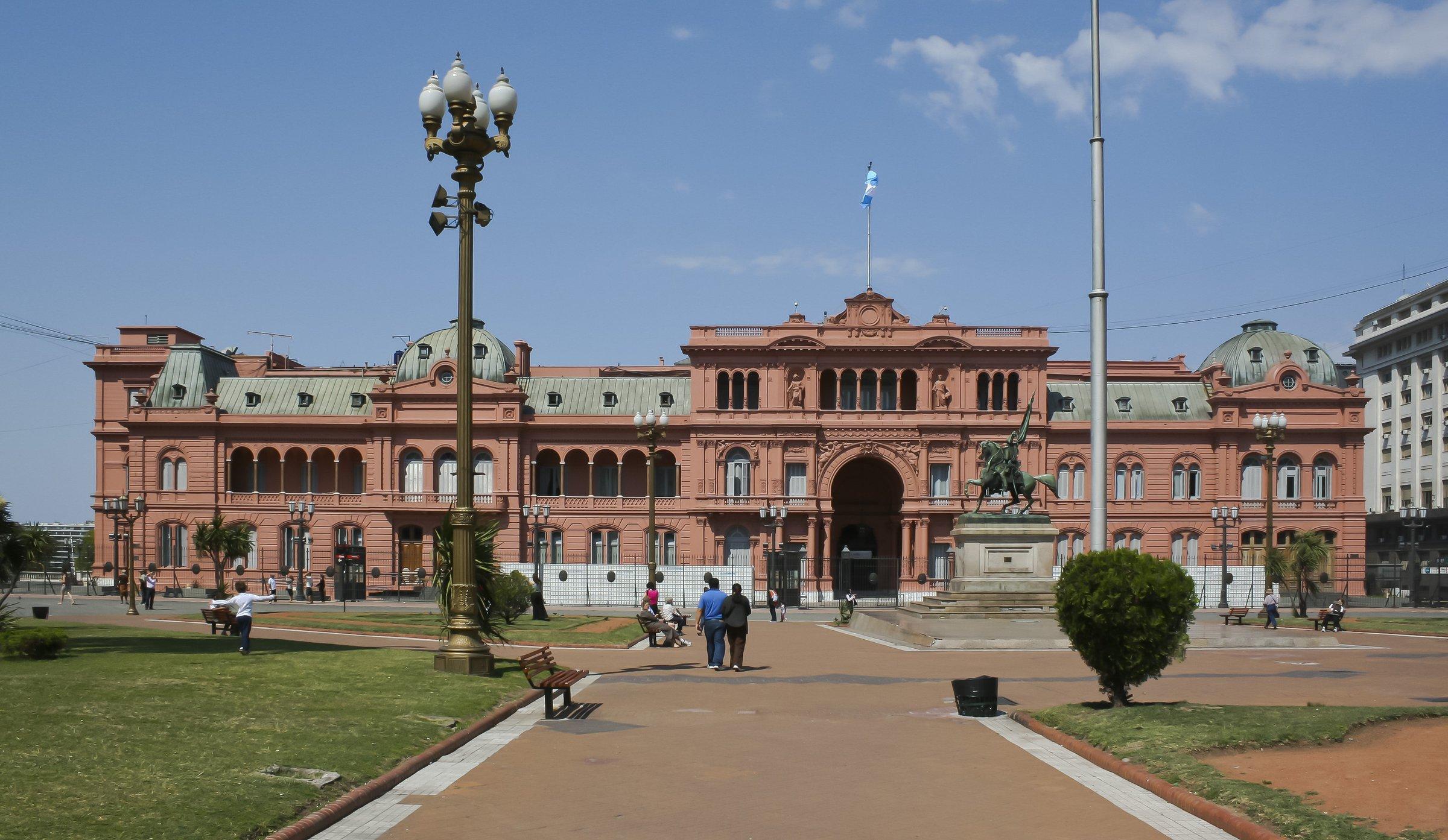
Photo: Diego Delso, CC BY-SA 3.0
Our estimate: energy and cuisine · Methodology
uenos Aires spreads across the western bank of the Río de la Plata—a megacity of mild winters and warm, humid summers that stays cheaper for its size than most comparable destinations in the Americas. Spanish carries everyday life, though English penetration is high for the region; the international-school market has genuine depth; healthcare is competent; and the dinner table, almost without exception, involves beef.
Buenos Aires suits remote workers earning in hard currency—the spread between foreign income and local prices is real, if unreliable. Families with school-age children find a solid international-school market at accessible fees. Cost-driven retirees on foreign pensions land well here; so do culinary travellers drawn to a meat-forward dining culture that has no interest in ending before midnight.
Petty crime is the city's persistent background condition—an ongoing adjustment rather than a dealbreaker. What Buenos Aires cannot offer is easy escape: options for a weekend away are thin by megacity standards, and the economic volatility—inflation that reshapes budgets month to month—tests anyone who needs reliable forward planning.
Find cities that fit you
A free quiz ranks all 343 cities against what matters to you.
Vibe and character
Buenos Aires operates at a particular pitch—not hurried, but permanently awake, with dinners arriving late and ending later. The beef arrives thick-cut, the wine pours generously, and the cultural calendar gives the week its shape. A city that keeps its best hours after dark.
Source: UNESCO · Methodology
City character
Our estimate: city character ratings · Methodology
Cost
$2,764 for a solo month places Buenos Aires in the mid-band of megacity cost — comparable to similar-scale cities across the cities we cover. Housing costs spread moderately across Buenos Aires — the central premium is real, and moving outward offers meaningful but not dramatic savings.
Source: Numbeo, collected November 2026, in our cost model · Methodology
These are recurring monthly costs. Moving itself — deposits, shipping, visas, flights, temporary accommodation — is not included, and it is usually the largest number in your first year. When grouped by region elsewhere on this site, North America covers the United States, Canada, and Mexico.
All prices are a November 2026 baseline. Prices in a few chronically high-inflation economies (Turkey, Egypt, Argentina, Pakistan, Sri Lanka, Nigeria, Ghana, Laos, and Bolivia) move quickly — treat their precise figures with extra care.
Monthly cost · by household
Priced for a Western-expat mid-range lifestyle — local-style living usually costs less.
All figures above are the Average lifestyle baseline for Buenos Aires — Western mid-range expat methodology, November 2026, line-by-line cost model. Want to model a different lifestyle? Use the widget below to swap household size, lifestyle tier, and quick toggles. It starts from the same Solo + Average baseline and diverges as you customize.
Run the full Cost Reality Check for Buenos Aires
Priced for your household and lifestyle tier, line by line. $79 one-time.
Where Buenos Aires sits globally
Sits in the mid-band of corpus lifestyle costs.
Safety and rights
Personal safety reads very low — 37 — with petty crime the persistent, near-constant backdrop rather than an occasional risk: bags, phones, and unattended belongings need active attention almost everywhere.
Sources: Numbeo, collected November 2026 · ILGA World · Georgetown GIWPS, 2023/24 · Freedom House · Methodology
Climate
The climate is humid subtropical — long warm summers with significant humidity, short mild winters that pass without true cold. Seasons split into a warm-to-hot summer and cooler winter — peak heat in January reaches around 28°C, while winter brings shorter, cooler days.
Sources: WMO / NOAA NCEI, normals 1991–2020, published 2023, checked Oct 2026 · ACAG SatPM2.5 (Washington University in St. Louis), 2021–2023 · Methodology
Our estimate: winter rating · Methodology
12-month temperature and rainfall
January is the hottest month at 28°C average highs; January brings the year's heaviest rainfall at 118 mm.
Season by season
Coolest months · Jun–Aug
The coolest stretch of the year — average highs around 14°C.
Hottest months · Dec–Feb
The warmest stretch of the year — average highs around 28°C.
Wettest months · Dec–Feb
The heaviest rainfall of the year — about 118 mm in the wettest month.
Healthcare
Healthcare quality in Buenos Aires is good across the everyday range — the better facilities set the standard, and quality is less uniform below them. English-language care is available in the larger private facilities, and access runs through the country's health system.
Source: international insurers, 2024 · Methodology
Our estimate: healthcare quality and English-medium care · Methodology
Costs run moderate — insurance at $152 a month and out-of-pocket pricing below Western private rates.
Argentina's public system covers citizens through a national programme; expats can register on a fee basis, though most prefer the private route for daily medicine. Expats typically use the private system for routine care and elective procedures — the public sector serves citizens and the broader population, with quality variable by facility. Premiums for global-portability cover sit comfortably below US private-market rates — accessible pricing for the option of treatment back home or elsewhere.
Systems, insurance and prescription rules are set nationally, not city by city. How healthcare abroad actually works
The quiz weights healthcare quality against your other priorities — climate, cost, language — to show where Buenos Aires stands. Get the full ranking · $99
Practical
Daily life in Buenos Aires moves easily — walking or transit carries most daily trips, with limited frictions. Transit in Buenos Aires is well-developed — high network coverage and frequency support daily life without need for a car. Walking is practical in central districts but constrained at the edges.
Sources: OpenStreetMap contributors · EF EPI · Methodology
Our estimate: visa and admin, Western digital services · Methodology
Language
Buenos Aires's main language is Spanish, with population English proficiency in the High band — the language friction is real but manageable for English-speaking expats. English handles most expat-facing scenarios in Buenos Aires — hotels, business services, central restaurants — though residential and service-tier contexts can require local-language patience. Investing in Spanish matters for residential integration — short stays work in English alone, longer stays benefit from local-language competence.
Mobility and connectivity
At walkability 55, walking covers central-district needs in Buenos Aires but is not the primary mode for movement at the metropolitan scale. Public transit in Buenos Aires is solid — at transit score 80, daily mobility runs on the network, with ride-hail and private vehicle as supplements rather than necessities. At an average of $4 per trip, ride-hailing in Buenos Aires is among the cheapest across the cities we cover — frequent use doesn't strain the budget.
Transit scores count only transit with its own dedicated right-of-way — metro, elevated and underground rail, trams on dedicated lines, and fully separated busways (BRT). Buses and trams sharing regular car lanes don’t count, however frequent.
Visa pathways
Argentina offers generous visa-free entry for most Western passport holders, extendable once at immigration offices. For longer stays, the Rentista Visa covers those with passive foreign income; the Pensionado Visa is built for retirees on a lifetime pension; and the Transitory Digital Nomad Residence serves remote workers as a bridging permit. Verify with the consulate—requirements shift with economic conditions.
Visa pathways and admin ratings shown here are for the principal applicant — spouse and dependant work rights vary by pathway; check the linked official source before relying on them.
Minority faith infrastructure
Mosques — many · Synagogues — many · Buddhist temples — few.
We record mosques, synagogues, Buddhist temples and Hindu temples — the ones hardest to assume from a country's majority religion — and show whichever are present here. Christian places of worship are not recorded; in most of the corpus they are the default rather than the question.
The quiz weights admin complexity against your situation to show where Buenos Aires stands. Get the full ranking · $99
Schools
The international-school landscape in Buenos Aires runs deep — 39 schools provide international curricula, of which 34 carry an IB programme, with capacity across curriculum types and price tiers. Buenos Aires's international tuition averages $13,344 a year — solidly mid-market by global standards, with premium institutions well above and mid-tier alternatives below.
Our estimate: school counts · Methodology
Tuition: Estimated — no published price found.
Buenos Aires's international-school market is one of the deeper in South America — 39 schools serve the expat community at solid capacity. The 39 international-curriculum schools in Buenos Aires span British, American, IB, and a broader range of Continental-European and Asian curricula, of which 34 carry an IB programme, with substantial capacity at the established institutions. Tuition averages $13,344 a year across the system, with a wide spread — premium schools run several multiples of the average and smaller mid-market schools sit well below the mean.
Buenos Aires's bilingual sector sits below the international layer — Spanish-English schools at meaningfully cheaper tuition than the international tier, often a sensible compromise for longer stays. Family relocation to Buenos Aires works for essentially any profile — the choice is between price tier, curriculum specificity, and neighbourhood, with capacity meaningful across the market.
The quiz weights school availability against your other priorities — climate, cost, language, healthcare — to rank Buenos Aires against other cities with comparable school depth. Compare the free and full quiz
Sources
- Numbeo, collected November 2026, in our cost model: monthly costs, cost rank
- WMO / NOAA NCEI, normals 1991–2020, published 2023, checked Oct 2026: climate type and temperatures, muggy months
- Numbeo, collected November 2026: safety index
- Freedom House: political freedom
- EF EPI: English proficiency
- UNESCO: World Heritage sites
- ILGA World: LGBTQ+ rights
- Georgetown GIWPS, 2023/24: women’s safety
- ACAG SatPM2.5 (Washington University in St. Louis), 2021–2023: air quality
- international insurers, 2024: health insurance
- OpenStreetMap contributors: walk and transit scores
Data last reviewed October 2026
The Buenos Aires decision pack.
Includes Find My City (every city that clears your non-negotiables, ranked) and the Cost Reality Check for Buenos Aires. One-time payment.
Similar to Buenos Aires


Our estimate: food and weekend chips · Methodology
Find cities that fit you
A free quiz ranks all 343 cities against what matters to you.