Middle East · United Arab Emirates
Dubai
Dubai runs on a simple arrangement: exceptional infrastructure, in a state where civil guarantees are not on the table.
Solo $5,335/mo · Couple $6,990/mo · Data as of November 2026
Our estimate: energy and cuisine · Methodology
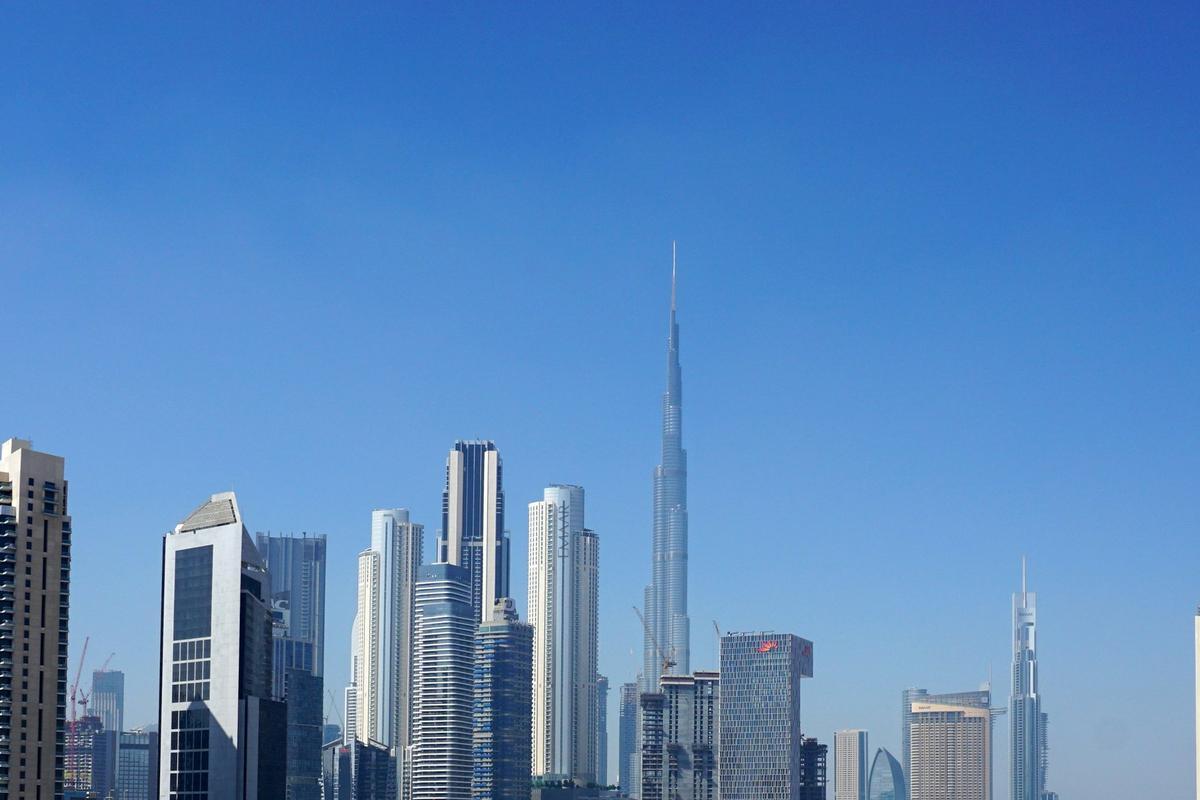
ubai spreads along the Persian Gulf coast as a city built almost entirely by and for expatriates—the overwhelming majority of residents hold foreign passports, Arabic is the official language, and daily commerce runs largely in English. The cost of living sits at the upper end of the region, offset by the absence of income tax.
Dubai rewards the globally mobile professional, the family drawn by an unusually deep international-school market and hospitals of a standard rare outside major Western cities, and the retiree seeking tax efficiency and a hub with exceptional short-haul connections to virtually anywhere they care about.
The constraints here run deeper than logistics. Civil liberties are materially restricted, same-sex relationships face criminal sanction under the law, and press freedom is not operative—conditions that no amount of infrastructure quality softens. The city is not built for walking, and the heat enforces that logic for most of the year.
Find cities that fit you
A free quiz ranks all 343 cities against what matters to you.
Vibe and character
Dubai runs at a pitch that feels calibrated rather than organic—late evenings, an ordered sensory register, and a culinary scene assembled from every corner of the world. Short-haul connections make a different geography feel like a weekend proposition. The texture is controlled, international, and relentlessly air-conditioned.
Source: UNESCO · Methodology
City character
Our estimate: city character ratings · Methodology
Cost
Dubai's cost runs above the large-city median — $5,335 for a solo month, above typical peer city pricing. The cost ladder within Dubai has the expected shape — prime areas command a premium over outer districts, though not at the extremes seen in cities with very high inequality.
Source: Numbeo, collected November 2026, in our cost model · Methodology
These are recurring monthly costs. Moving itself — deposits, shipping, visas, flights, temporary accommodation — is not included, and it is usually the largest number in your first year. When grouped by region elsewhere on this site, North America covers the United States, Canada, and Mexico.
Monthly cost · by household
Priced for a Western-expat mid-range lifestyle — local-style living usually costs less.
All figures above are the Average lifestyle baseline for Dubai — Western mid-range expat methodology, November 2026, line-by-line cost model. Want to model a different lifestyle? Use the widget below to swap household size, lifestyle tier, and quick toggles. It starts from the same Solo + Average baseline and diverges as you customize.
Run the full Cost Reality Check for Dubai
Priced for your household and lifestyle tier, line by line. $79 one-time.
Where Dubai sits globally
Lifestyle costs sit in the corpus's upper-mid band.
Safety and rights
Personal safety in Dubai reads as very high — 84 out of 100, with a uniform-safe profile that extends across hours, transit, and demographics. On civil liberties, the floor is low: Freedom House classifies United Arab Emirates 'Not Free' and ILGA records same-sex conduct as criminalised.
US State Department Level 3: reconsider travel due to terrorism and armed conflict, updated 22 Oct 2026.
Sources: Numbeo, collected November 2026 · US State Department, read November 2026 · ILGA World · Georgetown GIWPS, 2023/24 · Freedom House · Methodology
Climate
Hot desert defines Dubai's climate — winter is the mild break rather than a true season, and summer highs reach around 42°C in August. Rainfall is minimal across most of the year — the wettest month is March, and most months pass with little precipitation. Summers can be brutal — 42°C average highs in August make outdoor life unviable for the warmest months without air conditioning as standard.
Sources: WMO / NOAA NCEI, normals 1991–2020, published 2023, checked Oct 2026 · Copernicus Climate Change Service (ERA5), dataset cited 2023, means for 1991–2020, checked Oct 2026 · ACAG SatPM2.5 (Washington University in St. Louis), 2021–2023 · Methodology
Our estimate: winter rating · Methodology
12-month temperature and rainfall
August delivers the year's hottest average highs at 42°C; March the wettest at 22 mm.
Season by season
Coolest months · Dec–Feb
The coolest stretch of the year — average highs around 24°C.
Hottest months · Jun–Aug
Peak heat — average highs around 42°C. Outdoor activity tends to shift to mornings and evenings.
Wettest months · Jan · Mar · Dec
The heaviest rainfall of the year — about 22 mm in the wettest month.
Healthcare
Healthcare is a strong point in Dubai, with deep specialist capacity at the better hospitals. Healthcare quality reads as excellent, English is widely used in clinical settings in the private system, and care is organised through the country's health system.
Source: international insurers, 2024 · Methodology
Our estimate: healthcare quality and English-medium care · Methodology
The cost picture is mid-band — insurance at $152 a month, procedures cheaper than US equivalents though not at the budget-market level.
Public healthcare in Dubai is structurally limited for foreign residents — mandatory private cover through employers is the system's expat layer, with the public system serving primarily United Arab Emirates nationals. The practical expat pattern is to use the mandatory employer-provided cover for routine and most specialist needs — public sector access for foreign residents is structurally limited. International cover with global portability is competitively priced and widely held — supplements employer-mandated local plans for those wanting cross-border options.
Systems, insurance and prescription rules are set nationally, not city by city. How healthcare abroad actually works
The quiz weights healthcare quality against your other priorities — climate, cost, language — to show where Dubai stands. Get the full ranking · $99
Practical
Dubai's mobility is solid — with one or two parts sitting below the top tier. Public transit covers the central spine well. Walking is a constrained mode. Tap water in Dubai is generally filtered or replaced with bottled water for drinking — household water systems typically include a filter or dispenser.
Sources: OpenStreetMap contributors · EF EPI · Methodology
Our estimate: visa and admin, Western digital services · Methodology
Language
The main language of Dubai is Arabic, and the EF Index rates the population in the Low band on English — how far English carries depends heavily on the neighbourhood and the service. Practical English in Dubai varies by setting — dependable at the obvious expat-facing layers, much less predictable beyond them. For stays over a year, Arabic study pays back — even where English covers the essentials, the local language opens up more of Dubai.
Mobility and connectivity
Walking is a constrained mode in Dubai — the 35 score reflects limited pedestrian infrastructure, traffic-priority streets, and distances that exceed practical walking range outside the centre. Dubai's public transit covers the central districts reliably — the main lines reach the major expat areas, with coverage tapering toward outer suburbs. Ride-hail in Dubai runs at mid-band prices — $8 per trip, sensible for occasional use but not the cheap default it is in lower-cost markets.
Transit scores count only transit with its own dedicated right-of-way — metro, elevated and underground rail, trams on dedicated lines, and fully separated busways (BRT). Buses and trams sharing regular car lanes don’t count, however frequent.
Visa pathways
The UAE offers three principal long-stay routes: the Virtual Work Residence Visa for those employed by companies outside the country, the Dubai Retirement Visa for qualifying retirees meeting income, savings, or property conditions, and the Golden Visa for significant property investors and specialist categories—a decade-long renewable grant that functions as de facto permanent residence.
Visa pathways and admin ratings shown here are for the principal applicant — spouse and dependant work rights vary by pathway; check the linked official source before relying on them.
Minority faith infrastructure
Mosques — very many · Buddhist temples — few · Hindu temples — moderate.
We record mosques, synagogues, Buddhist temples and Hindu temples — the ones hardest to assume from a country's majority religion — and show whichever are present here. Christian places of worship are not recorded; in most of the corpus they are the default rather than the question.
The quiz weights admin complexity against your situation to show where Dubai stands. Get the full ranking · $99
Schools
Dubai carries one of the deepest international-school markets in the corpus — 184 schools, of which 28 carry an IB programme, built up over decades to serve a heavily expat-driven family demographic. Tuition averages $20,786 a year — premium-tier pricing across the cities we cover, with the spread between established-elite and recent-entrant schools wider than the average suggests.
Our estimate: school counts · Methodology
Tuition: Estimated — no published price found.
International schooling in Dubai is unusually deep — 184 schools run international curricula, giving relocating families a wide choice of school and curriculum. The 184 international-curriculum schools include British, American, IB, Australian, Canadian, and a smaller cluster of European-curriculum providers, with the IB count at 28. Tuition averages $20,786 a year across the system — premium-tier pricing across the cities we cover, with the spread between established-elite and recent-entrant schools wider than the average suggests.
Below the international tier, options vary — local private and state schools fill the gap with varying quality and curriculum coherence. Dubai's depth means most family profiles — from short-term international rotators to long-stay families with regional ambitions for their children — find a fit; the question is usually budget calibration rather than availability.
The quiz weights school availability against your other priorities — climate, cost, language, healthcare — to rank Dubai against other cities with comparable school depth. Compare the free and full quiz
Sources
- Numbeo, collected November 2026, in our cost model: monthly costs, cost rank
- WMO / NOAA NCEI, normals 1991–2020, published 2023, checked Oct 2026: climate type and temperatures
- Numbeo, collected November 2026: safety index
- Freedom House: political freedom
- EF EPI: English proficiency
- UNESCO: World Heritage sites
- US State Department, read November 2026: travel warning
- ILGA World: LGBTQ+ rights
- Georgetown GIWPS, 2023/24: women’s safety
- Copernicus Climate Change Service (ERA5), dataset cited 2023, means for 1991–2020, checked Oct 2026: muggy months
- ACAG SatPM2.5 (Washington University in St. Louis), 2021–2023: air quality
- international insurers, 2024: health insurance
- OpenStreetMap contributors: walk and transit scores
Data last reviewed October 2026
The Dubai decision pack.
Includes Find My City (every city that clears your non-negotiables, ranked) and the Cost Reality Check for Dubai. One-time payment.
Similar to Dubai
Our estimate: food and weekend chips · Methodology
Find cities that fit you
A free quiz ranks all 343 cities against what matters to you.