Western Europe · Ireland
Dublin
An EU capital where English is the native tongue and tech money has rewritten rents, yet the pub remains the operating system.
Solo $5,782/mo · Couple $7,807/mo · Data as of November 2026
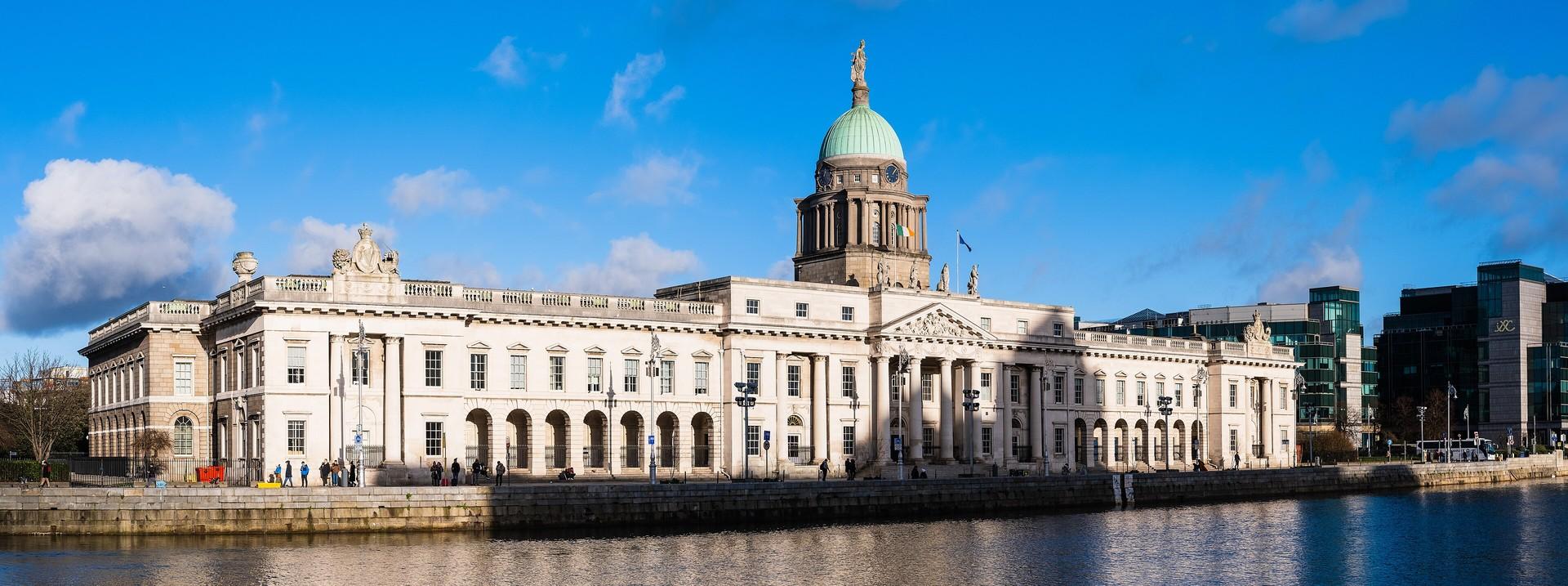
Photo: Christian David, CC BY-SA 4.0 (cropped)
Our estimate: energy and cuisine · Methodology
ublin sits at the mouth of the Liffey, a cool Atlantic capital where English is the native tongue and the healthcare system is strong. It runs expensive by European standards, and the international-school market is thin. The light is grey more often than not; residents learn to prefer it.
Dublin rewards those for whom English-medium EU life is non-negotiable: remote workers who want a frictionless base, families who can navigate a thin international-school market by leaning on strong local provision, and healthcare-focused retirees who find the medical infrastructure reliable. The pub circuit and European connections give food-driven travellers and short-haul enthusiasts solid ground.
Cost is the primary constraint—Dublin is among the more expensive EU addresses, and housing bites hard. Public transport underdelivers for a city of this size, making car dependency a practical reality for many. Weekend escapes within Ireland are limited, and the damp, grey climate asks something of you before it becomes familiar.
Find cities that fit you
A free quiz ranks all 343 cities against what matters to you.
Vibe and character
Dublin runs on a low, steady hum—a city that wakes reluctantly, fills quickly by evening, and measures the night in rounds. The food scene has grown well past pub fare into something more considered. When the island closes in, a short flight opens the continent.
Source: UNESCO · Methodology
City character
Our estimate: city character ratings · Methodology
Cost
Top-tier large-city cost — Dublin at $5,782 solo, among the priciest large cities across the cities we cover. The internal spread is narrow: housing options across the city cluster tightly around the average, with no real cost gap between mid-range and prime districts.
Source: Numbeo, collected November 2026, in our cost model · Methodology
These are recurring monthly costs. Moving itself — deposits, shipping, visas, flights, temporary accommodation — is not included, and it is usually the largest number in your first year. When grouped by region elsewhere on this site, North America covers the United States, Canada, and Mexico.
Monthly cost · by household
Priced for a Western-expat mid-range lifestyle — local-style living usually costs less.
All figures above are the Average lifestyle baseline for Dublin — Western mid-range expat methodology, November 2026, line-by-line cost model. Want to model a different lifestyle? Use the widget below to swap household size, lifestyle tier, and quick toggles. It starts from the same Solo + Average baseline and diverges as you customize.
Run the full Cost Reality Check for Dublin
Priced for your household and lifestyle tier, line by line. $79 one-time.
Where Dublin sits globally
Sits in the top cost band of the corpus.
Safety and rights
Dublin scores at 46 on safety, with petty crime a prominent risk in central zones and on transit.
Sources: Numbeo, collected November 2026 · ILGA World · Georgetown GIWPS, 2023/24 · Freedom House · Methodology
Climate
The climate is temperate on the cool side — winters that demand layers, summers mild rather than hot, with November the wettest month. Rainfall reaches its peak in November (83mm), and temperatures top out around 20°C in July.
Sources: WMO / NOAA NCEI, normals 1991–2020, published 2023, checked Oct 2026 · Copernicus Climate Change Service (ERA5), dataset cited 2023, means for 1991–2020, checked Oct 2026 · ACAG SatPM2.5 (Washington University in St. Louis), 2021–2023 · Methodology
Our estimate: winter rating · Methodology
12-month temperature and rainfall
July is the hottest month at 20°C average highs; November brings the year's heaviest rainfall at 83 mm.
Season by season
Coolest months · Dec–Feb
The coolest stretch of the year — average highs around 8°C.
Hottest months · Jun–Aug
The warmest stretch of the year — average highs around 20°C.
Wettest months · Aug · Oct · Nov
The heaviest rainfall of the year — about 83 mm in the wettest month.
Healthcare
Dublin carries excellent healthcare with universal coverage as the foundation — long-stay residents typically join the system, with private cover used for specific needs. English-medium care is reliably available in the private sector, and access runs through the country's health system.
Source: international insurers, 2024 · Methodology
Our estimate: healthcare quality and English-medium care · Methodology
The cost picture is mid-band — insurance at $152 a month, procedures cheaper than US equivalents though not at the budget-market level.
The public system provides universal coverage in Dublin — long-stay expats typically register and rely on it for primary and emergency care. Long-stay expats typically register with the public system after qualifying for residency, using it for primary care and emergencies while many maintain private cover for elective procedures and shorter waits. Premiums for international-grade insurance with global portability remain well below comparable US schemes — often a quarter or less of the equivalent — though for residents the public-private mix usually obviates the need.
Systems, insurance and prescription rules are set nationally, not city by city. How healthcare abroad actually works
The quiz weights healthcare quality against your other priorities — climate, cost, language — to show where Dublin stands. Get the full ranking · $99
Practical
Getting around Dublin is well-developed — daily trips work reliably, with the gaps where they exist being inconveniences rather than constraints. Dublin's transit network is thin — bus and limited rail coverage means most residents rely on cars or ride-hail for everyday movement. Dublin's walkability is strong — most daily needs can be met on foot in the central districts. Dublin's tap water is safe to drink — a practical convenience and a marker of broader water infrastructure quality.
Sources: OpenStreetMap contributors · EF EPI · Methodology
Our estimate: visa and admin, Western digital services · Methodology
Language
Dublin operates in English — English-speaking expats face no meaningful language barrier in daily life. Practical English access in Dublin is complete — no contexts require local-language ability.
Mobility and connectivity
At a walkability estimate of 70, Dublin works as a walking city — connected districts, solid sidewalks, and density that supports pedestrian-first living. Public transit in Dublin works for selected central routes — the broader network is limited and most expats supplement with ride-hail or private vehicle. At $16 per typical trip, ride-hailing in Dublin is a real budget line — most residents combine it with transit or vehicle ownership rather than defaulting to it.
Transit scores count only transit with its own dedicated right-of-way — metro, elevated and underground rail, trams on dedicated lines, and fully separated busways (BRT). Buses and trams sharing regular car lanes don’t count, however frequent.
Visa pathways and admin ratings shown here are for the principal applicant — spouse and dependant work rights vary by pathway; check the linked official source before relying on them.
Minority faith infrastructure
Mosques — moderate · Synagogues — few · Buddhist temples — few · Hindu temples — few.
We record mosques, synagogues, Buddhist temples and Hindu temples — the ones hardest to assume from a country's majority religion — and show whichever are present here. Christian places of worship are not recorded; in most of the corpus they are the default rather than the question.
The quiz weights admin complexity against your situation to show where Dublin stands. Get the full ranking · $99
Schools
Dublin's public system includes English-medium schools, and a moderate international-school sector of 15 schools, of which 3 carry an IB programme sits alongside it for families wanting alternatives. Tuition averages $11,302 a year — the spread is wide between premium and mid-market schools, but the system overall runs cheaper than most Western alternatives.
Our estimate: school counts · Methodology
Tuition: Estimated — no published price found.
Dublin's international-school market is moderately developed — 15 schools across the major Anglosphere, Continental-European, and IB curricula provide reasonable coverage for relocating families. Dublin's 15 international-curriculum schools cover the major Anglosphere, Continental-European, and IB curricula, of which 3 carry an IB programme, with reasonable curriculum range for typical expat needs. International tuition averages $11,302 a year — the price band sits below most Western expat-hub equivalents, with the spread wide enough to accommodate most family budgets.
Below the international tier sits the public school system, which includes English-medium schools — eligibility and admission rules for newcomers are worth checking early. Most expat families find a workable fit in Dublin — the question is usually budget calibration and curriculum match rather than absence of options.
The quiz weights school availability against your other priorities — climate, cost, language, healthcare — to rank Dublin against other cities with comparable school depth. Compare the free and full quiz
Sources
- Numbeo, collected November 2026, in our cost model: monthly costs, cost rank
- WMO / NOAA NCEI, normals 1991–2020, published 2023, checked Oct 2026: climate type and temperatures
- Numbeo, collected November 2026: safety index
- Freedom House: political freedom
- EF EPI: English proficiency
- UNESCO: World Heritage sites
- ILGA World: LGBTQ+ rights
- Georgetown GIWPS, 2023/24: women’s safety
- Copernicus Climate Change Service (ERA5), dataset cited 2023, means for 1991–2020, checked Oct 2026: muggy months
- ACAG SatPM2.5 (Washington University in St. Louis), 2021–2023: air quality
- international insurers, 2024: health insurance
- OpenStreetMap contributors: walk and transit scores
Data last reviewed October 2026
The Dublin decision pack.
Includes Find My City (every city that clears your non-negotiables, ranked) and the Cost Reality Check for Dublin. One-time payment.
Similar to Dublin




Our estimate: food and weekend chips · Methodology
Find cities that fit you
A free quiz ranks all 343 cities against what matters to you.