Australia & Pacific · Australia
Melbourne
A city that has resolved most of what makes cities difficult, then handed you the bill and the distance.
Solo $4,747/mo · Couple $6,577/mo · Data as of November 2026
Our estimate: energy and cuisine · Methodology
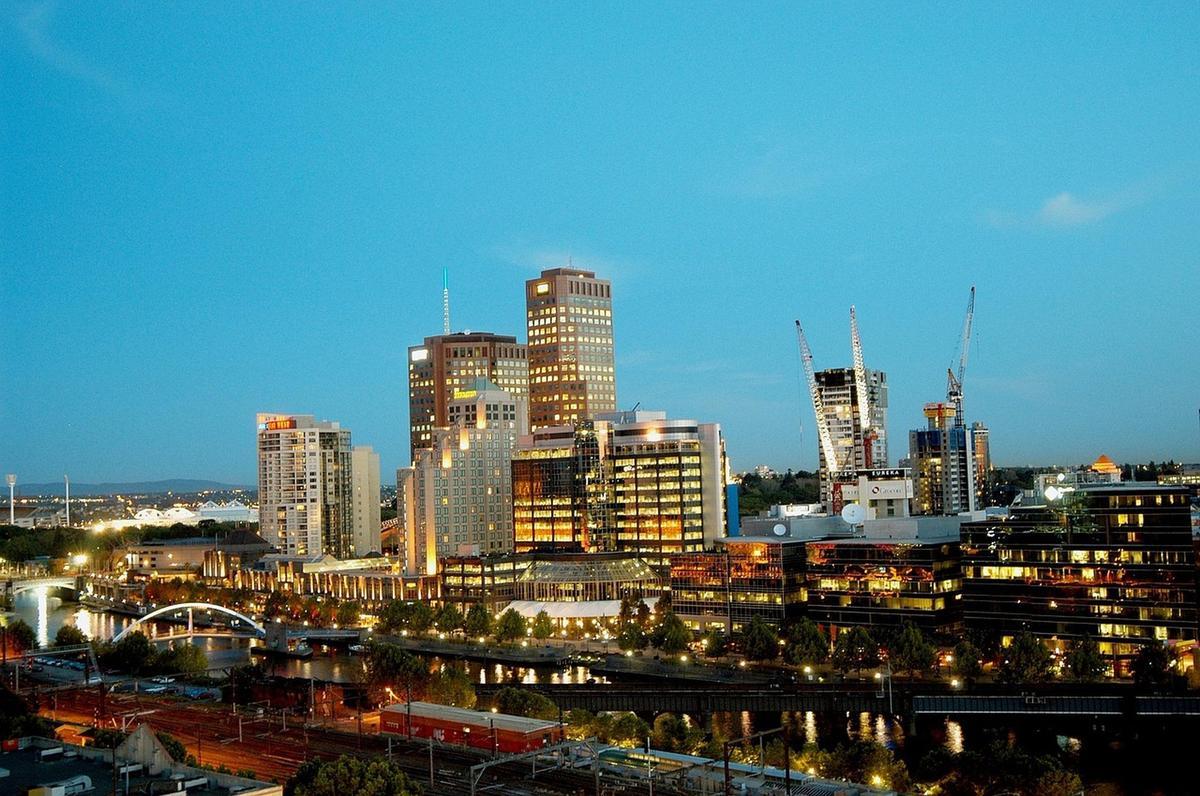
elbourne anchors Victoria's temperate south—a megacity of clean air, cool winters, and a cultural life that has earned its reputation over decades. English is the only language you'll need; public healthcare is excellent; and the international-school market runs deep. The cost, however, is proportionate to all of this, and it runs high.
Melbourne suits families who have stopped trading cost against quality—the healthcare system performs at a high level, the school market runs deep in both local and international options, and the outdoor culture keeps children occupied. Healthcare-focused retirees find an English-speaking system that delivers. Remote workers with stronger-than-average salaries find the math manageable; food-driven residents find the culinary scene overdelivers.
Cost and geography are where Melbourne demands the most adjustment. The city sits distant from any major international hub, and short-haul options are limited in a way that reduces the long weekend to a domestic affair. The sprawl is real; walkability is uneven across its many districts, and transit—though extensive—does not substitute for a car in most of them.
Find cities that fit you
A free quiz ranks all 343 cities against what matters to you.
Vibe and character
Melbourne runs late and takes food seriously—early coffee before the commute, weekend markets, long evenings across inner-suburb restaurants. The energy buzzes without tipping frenetic, and the air stays clean for a city this size. Weekends pull toward coast or country, and the city's outdoor orientation is its most reliable pleasure.
Source: UNESCO · Methodology
City character
Our estimate: city character ratings · Methodology
Cost
$4,747 for a solo month puts Melbourne in the upper-mid band of megacity cost — above the global median but below the top tier. The internal spread is narrow: housing options across the city cluster tightly around the average, with no real cost gap between mid-range and prime districts.
Source: Numbeo, collected November 2026, in our cost model · Methodology
These are recurring monthly costs. Moving itself — deposits, shipping, visas, flights, temporary accommodation — is not included, and it is usually the largest number in your first year. When grouped by region elsewhere on this site, North America covers the United States, Canada, and Mexico.
Monthly cost · by household
Priced for a Western-expat mid-range lifestyle — local-style living usually costs less.
All figures above are the Average lifestyle baseline for Melbourne — Western mid-range expat methodology, November 2026, line-by-line cost model. Want to model a different lifestyle? Use the widget below to swap household size, lifestyle tier, and quick toggles. It starts from the same Solo + Average baseline and diverges as you customize.
Run the full Cost Reality Check for Melbourne
Priced for your household and lifestyle tier, line by line. $79 one-time.
Where Melbourne sits globally
Sits in the upper-mid band on cost.
Safety and rights
Safety scores moderate — 56 out of 100 — with opportunistic petty crime the most visible risk.
Sources: Numbeo, collected November 2026 · ILGA World · Georgetown GIWPS, 2023/24 · Freedom House · Methodology
Climate
Melbourne carries a temperate climate with mild winters — average highs between about 14°C and 26°C across the year, and December the wettest month. The year runs on a temperate rhythm — December brings the most rain, and January the warmest days.
Sources: WMO / NOAA NCEI, normals 1991–2020, published 2023, checked Oct 2026 · ACAG SatPM2.5 (Washington University in St. Louis), 2021–2023 · Methodology
Our estimate: winter rating · Methodology
12-month temperature and rainfall
Peak heat in January at 26°C average highs; peak rainfall in December at 61 mm.
Sunshine hours: not available for this city
Season by season
Coolest months · Jun–Aug
The coolest stretch of the year — average highs around 14°C.
Hottest months · Dec–Feb
The warmest stretch of the year — average highs around 26°C.
Wettest months · Apr · Nov · Dec
The heaviest rainfall of the year — about 61 mm in the wettest month.
Healthcare
Melbourne carries excellent healthcare with universal coverage as the foundation — long-stay residents typically join the system, with private cover used for specific needs. English is widely used in clinical settings in the private system, and the country's health system sets how care is organised.
Source: international insurers, 2024 · Methodology
Our estimate: healthcare quality and English-medium care · Methodology
Healthcare costs are reasonable by developed-world standards — basic local insurance at $152 a month, with international-portable cover available at a premium.
Melbourne's public system runs on single-payer coverage — residents register and public funding covers core hospital care, with private medicine layering on for elective and supplemental needs. After qualifying for residency, most expats rely on the single-payer public system — private cover is supplementary, mainly for elective queue management. International-portable cover runs at competitive premiums for developed-world buyers — useful for cross-border options but supplementary to the single-payer public coverage.
Systems, insurance and prescription rules are set nationally, not city by city. How healthcare abroad actually works
The quiz weights healthcare quality against your other priorities — climate, cost, language — to show where Melbourne stands. Get the full ranking · $99
Practical
Getting around Melbourne is well-developed — daily trips work reliably, with the gaps where they exist being inconveniences rather than constraints. Public transit is strong — solid network coverage across the city with reliable service. Melbourne's walkability is mixed — central areas walkable, outer districts less so. Tap water is drinkable straight from the source — no household filtration or bottled supply needed.
Sources: OpenStreetMap contributors · EF EPI · Methodology
Our estimate: visa and admin, Western digital services · Methodology
Language
The working language of Melbourne is English — primary across business, government, and daily life with native-level prevalence. In practice, English handles every category of daily life — institutional, conversational, and professional.
Mobility and connectivity
At walkability 58, Melbourne is walkable in the centre and car-dependent at the edges — the mode mix shifts by district. Melbourne's transit system is well-developed — the network covers the city comprehensively, with rail lines forming the spine and buses extending coverage. Ride-hail in Melbourne is priced high — $16 per typical trip, with frequent use costing meaningfully more than equivalent transit or vehicle alternatives.
Transit scores count only transit with its own dedicated right-of-way — metro, elevated and underground rail, trams on dedicated lines, and fully separated busways (BRT). Buses and trams sharing regular car lanes don’t count, however frequent.
Visa pathways
Australia's long-stay routes are built around skilled migration rather than passive income. The Working Holiday Visa (Subclass 417/462) suits younger arrivals with flexibility to extend; the Skills in Demand Visa (Subclass 482) requires employer sponsorship but carries a path to permanent residency; and the points-based Skilled Independent Visa (Subclass 189) does not require a sponsor. No retirement visa route exists.
Visa pathways and admin ratings shown here are for the principal applicant — spouse and dependant work rights vary by pathway; check the linked official source before relying on them.
Minority faith infrastructure
Mosques — many · Synagogues — moderate · Buddhist temples — many · Hindu temples — many.
We record mosques, synagogues, Buddhist temples and Hindu temples — the ones hardest to assume from a country's majority religion — and show whichever are present here. Christian places of worship are not recorded; in most of the corpus they are the default rather than the question.
The quiz weights admin complexity against your situation to show where Melbourne stands. Get the full ranking · $99
Schools
English-medium public schooling is available in Melbourne, subject to admission rules, supplemented by a deep international tier of 63 schools, of which 61 carry an IB programme for families on specific curriculum paths. Tuition averages $32,901 a year — among the most expensive international-school markets across the cities we cover, with the established-elite tier running multiples of the average.
Our estimate: school counts · Methodology
Tuition: Estimated — no published price found.
Melbourne's international-school market is deep relative to the regional context — 63 schools layered on top of the strong local state system, serving expat rotators and families with curriculum-specific needs. Curriculum variety is substantial — the 63 schools include British, American, French, German, IB, and other major curricula, of which 61 carry an IB programme, providing depth across most family profiles. At $32,901 a year on average, Melbourne's international tuition is top-tier across the cities we cover — the cost of school fees forming a substantial share of total family budget.
Below the international tier sits the public school system, which includes English-medium schools — eligibility and admission rules for newcomers are worth checking early. Family relocation to Melbourne works for essentially any profile — the choice is between price tier, curriculum specificity, and neighbourhood, with capacity meaningful across the market.
The quiz weights school availability against your other priorities — climate, cost, language, healthcare — to rank Melbourne against other cities with comparable school depth. Compare the free and full quiz
Sources
- Numbeo, collected November 2026, in our cost model: monthly costs, cost rank
- WMO / NOAA NCEI, normals 1991–2020, published 2023, checked Oct 2026: climate type and temperatures, muggy months
- Numbeo, collected November 2026: safety index
- Freedom House: political freedom
- EF EPI: English proficiency
- UNESCO: World Heritage sites
- ILGA World: LGBTQ+ rights
- Georgetown GIWPS, 2023/24: women’s safety
- ACAG SatPM2.5 (Washington University in St. Louis), 2021–2023: air quality
- international insurers, 2024: health insurance
- OpenStreetMap contributors: walk and transit scores
Data last reviewed October 2026
The Melbourne decision pack.
Includes Find My City (every city that clears your non-negotiables, ranked) and the Cost Reality Check for Melbourne. One-time payment.
Similar to Melbourne

Our estimate: food and weekend chips · Methodology
Find cities that fit you
A free quiz ranks all 343 cities against what matters to you.