North America · United States
Miami
A subtropical American city that telegraphs Latin American glamour from every terrace and delivers the bill in traffic and heat.
Solo $7,452/mo · Couple $10,560/mo · Data as of November 2026
Our estimate: energy and cuisine · Methodology
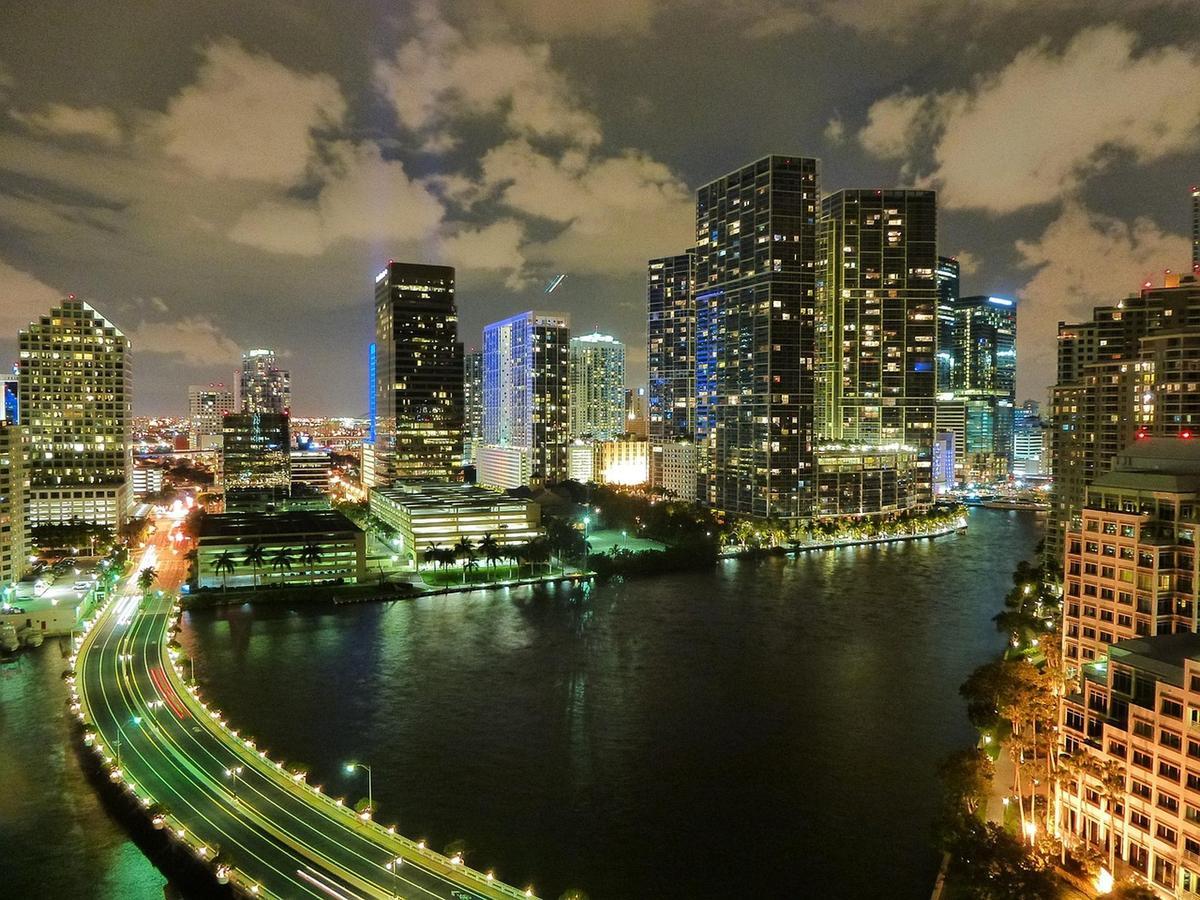
iami sits at the subtropical tip of Florida, a megacity whose cultural gravity leans Latin American more than conventionally American. Healthcare is excellent; the international-school market is solid; English is official, though Spanish operates as a parallel first tongue across much of the metropolitan area. The heat arrives in May and does not negotiate.
Miami suits remote workers on dollar incomes who want Latin American social texture without leaving US soil—English is everywhere, the nightlife good. Healthcare-focused retirees get excellent medical facilities in a native English-speaking environment. Families from Latin America find an unusual equilibrium: American-accredited schools, Spanish on the street, a community that needs no explaining.
The car is not optional here—transit infrastructure is thin across most of the metropolitan footprint, and without one, the city becomes a series of neighbourhoods you cannot reach. High costs sting even by American standards, and safety varies sharply enough by area that local knowledge matters. The humidity from late spring through autumn is not a passing inconvenience; it accumulates.
Find cities that fit you
A free quiz ranks all 343 cities against what matters to you.
Vibe and character
Miami runs late and warm—restaurants fill well past dinner hour, the terrace culture extends deep into the night, and the social register is unhurried in a way that reads Latin even when the conversation is English. The food scene is broad, and weekends drift toward the water.
Source: UNESCO · Methodology
City character
Our estimate: city character ratings · Methodology
Cost
At $7,452 solo, Miami runs at the top of the megacity cost ladder — comparable to the world's most expensive peer cities. The cost ladder within Miami has the expected shape — prime areas command a premium over outer districts, though not at the extremes seen in cities with very high inequality.
Source: Numbeo, collected November 2026, in our cost model · Methodology
These are recurring monthly costs. Moving itself — deposits, shipping, visas, flights, temporary accommodation — is not included, and it is usually the largest number in your first year. When grouped by region elsewhere on this site, North America covers the United States, Canada, and Mexico.
Monthly cost · by household
Priced for a Western-expat mid-range lifestyle — local-style living usually costs less.
All figures above are the Average lifestyle baseline for Miami — Western mid-range expat methodology, November 2026, line-by-line cost model. Want to model a different lifestyle? Use the widget below to swap household size, lifestyle tier, and quick toggles. It starts from the same Solo + Average baseline and diverges as you customize.
Run the full Cost Reality Check for Miami
Priced for your household and lifestyle tier, line by line. $79 one-time.
Where Miami sits globally
Sits in the top cost band of the corpus.
Safety and rights
Safety scores 47 — low — but the pattern is geographic: residents organise their lives around the safer districts and the safer hours.
Sources: Numbeo, collected November 2026 · ILGA World · Georgetown GIWPS, 2023/24 · Freedom House · Methodology
Climate
Miami runs tropical-monsoon — no winter in any meaningful sense, average highs no lower than about 25°C in any month, and a calendar split by rainfall rather than temperature. Rainfall is heavy — June peaks at 267mm.
Sources: WMO / NOAA NCEI, normals 1991–2020, published 2023, checked Oct 2026 · National meteorological services, checked Oct 2026 · ACAG SatPM2.5 (Washington University in St. Louis), 2021–2023 · Methodology
Our estimate: winter rating · Methodology
12-month temperature and rainfall
Hottest month is August with average highs of 33°C; wettest month is June with 267 mm of rainfall.
Sunshine hours: not available for this city
Season by season
Coolest months · Dec–Feb
The coolest stretch of the year — average highs around 25°C.
Hottest months · Jun–Aug
Peak heat — average highs around 33°C. Outdoor activity tends to shift to mornings and evenings.
Wettest months · Jun · Aug · Sep
The heaviest rainfall of the year — about 267 mm in the wettest month.
Healthcare
Healthcare in Miami is excellent — the system runs on a hybrid public-private model, with deep specialist capacity. English is widely used in clinical settings in the private system, and care is organised through the country's health system.
Source: international insurers, 2024 · Methodology
Our estimate: healthcare quality and English-medium care · Methodology
Costs run high — basic insurance at $710 a month, with the developed-world premium fully reflected in procedure pricing.
Public programmes in Miami target specific groups — such as older or lower-income residents, or citizens — rather than automatically covering every foreign resident, so most expats get cover through an employer or a private policy. Most long-stay expats keep continuous health insurance from arrival, since treatment is billed and costs without cover can be substantial. Whether to hold portable international cover alongside a local plan depends on travel patterns and on whether the local plan pays out abroad.
Systems, insurance and prescription rules are set nationally, not city by city. How healthcare abroad actually works
The quiz weights healthcare quality against your other priorities — climate, cost, language — to show where Miami stands. Get the full ranking · $99
Practical
Miami's mobility has substantive gaps — walking and transit are both limited, and the gaps combine into daily friction. Public transit is limited — central routes work but the broader network is patchy. Walking is a constrained mode. Miami's tap water is safe to drink — a practical convenience and a marker of broader water infrastructure quality.
Sources: OpenStreetMap contributors · EF EPI · Methodology
Our estimate: visa and admin, Western digital services · Methodology
Language
English is widely spoken in Miami alongside Spanish, and English speakers can handle most practical situations in it. In practice, English is widely used in Miami's business, tourism and service settings, though Spanish is the language of most daily conversation.
Mobility and connectivity
Miami's walkability is limited — a walkability estimate of 40 reflects an urban form built around vehicles, with pedestrian infrastructure varying sharply by neighbourhood. Transit at 38 covers Miami's central spine but thins quickly at the periphery — most residents combine transit with ride-hail or private vehicle. Ride-hail in Miami runs at mid-band prices — $13 per trip, sensible for occasional use but not the cheap default it is in lower-cost markets.
Transit scores count only transit with its own dedicated right-of-way — metro, elevated and underground rail, trams on dedicated lines, and fully separated busways (BRT). Buses and trams sharing regular car lanes don’t count, however frequent.
Visa pathways and admin ratings shown here are for the principal applicant — spouse and dependant work rights vary by pathway; check the linked official source before relying on them.
Minority faith infrastructure
Mosques — many · Synagogues — many · Buddhist temples — few · Hindu temples — few.
We record mosques, synagogues, Buddhist temples and Hindu temples — the ones hardest to assume from a country's majority religion — and show whichever are present here. Christian places of worship are not recorded; in most of the corpus they are the default rather than the question.
The quiz weights admin complexity against your situation to show where Miami stands. Get the full ranking · $99
Schools
English-medium public schooling is available in Miami, subject to admission rules, supplemented by a deep international tier of 39 schools, of which 39 carry an IB programme for families on specific curriculum paths. Tuition averages $46,773 a year — among the most expensive international-school markets across the cities we cover, with the established-elite tier running multiples of the average.
Our estimate: school counts · Methodology
Tuition: Estimated — no published price found.
The international-school sector in Miami is substantially developed — 39 schools across British, French, IB, and other international curricula serve families with curriculum-specific requirements. Curriculum variety is substantial — the 39 schools include British, American, French, German, IB, and other major curricula, of which 39 carry an IB programme, providing depth across most family profiles. International tuition runs $46,773 a year on average — sits at the top of the global expat-school market, with elite institutions running well above and family budgets planning accordingly.
English-medium public options are common in Miami, giving many expat families a state-school path, subject to admission rules. Most family profiles find a fit comfortably in Miami — the deep market means trade-offs are about price-curriculum-location optimization rather than absence of options.
The quiz weights school availability against your other priorities — climate, cost, language, healthcare — to rank Miami against other cities with comparable school depth. Compare the free and full quiz
Sources
- Numbeo, collected November 2026, in our cost model: monthly costs, cost rank
- WMO / NOAA NCEI, normals 1991–2020, published 2023, checked Oct 2026: climate type and temperatures
- Numbeo, collected November 2026: safety index
- Freedom House: political freedom
- EF EPI: English proficiency
- UNESCO: World Heritage sites
- ILGA World: LGBTQ+ rights
- Georgetown GIWPS, 2023/24: women’s safety
- National meteorological services, checked Oct 2026: muggy months
- ACAG SatPM2.5 (Washington University in St. Louis), 2021–2023: air quality
- international insurers, 2024: health insurance
- OpenStreetMap contributors: walk and transit scores
Data last reviewed October 2026
The Miami decision pack.
Includes Find My City (every city that clears your non-negotiables, ranked) and the Cost Reality Check for Miami. One-time payment.
Similar to Miami





Our estimate: food and weekend chips · Methodology
Find cities that fit you
A free quiz ranks all 343 cities against what matters to you.