East Asia · Japan
Nagoya
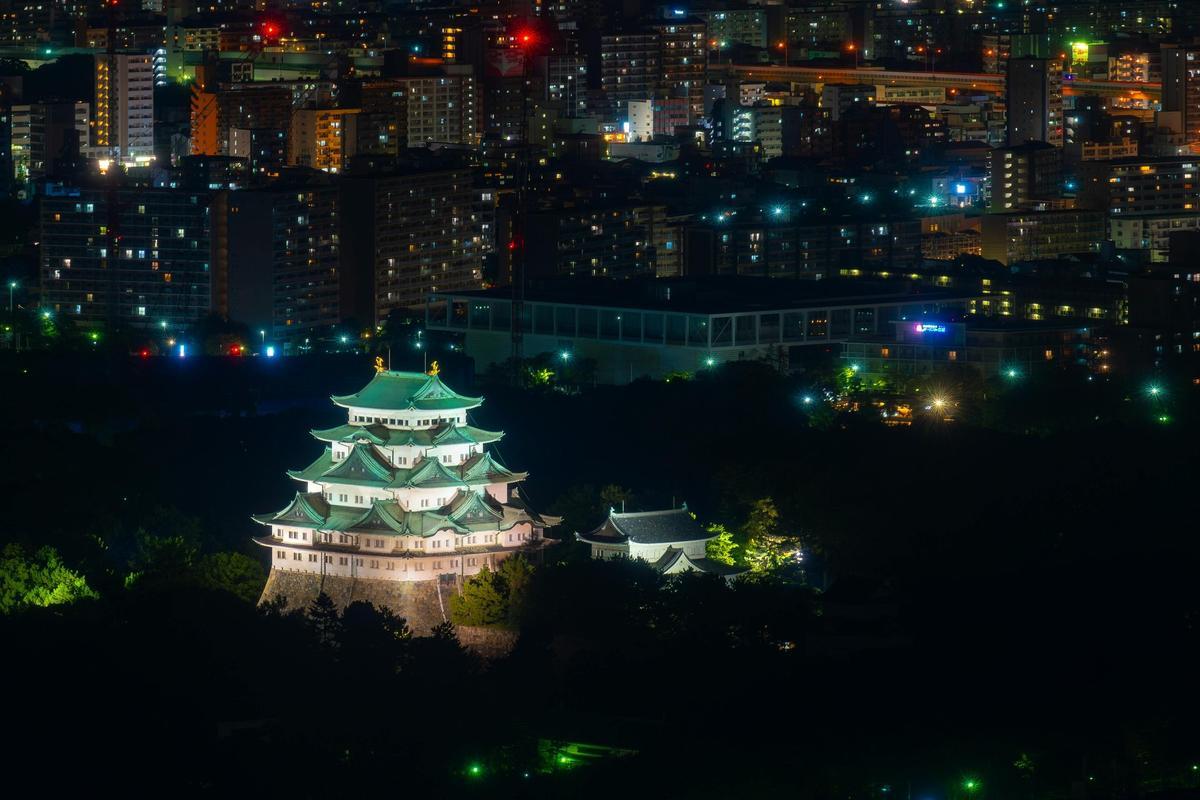
Japan's industrial engine—freight routes, auto plants, and the nation's largest seaport—humming beneath a city that declines to perform for outsiders.
Solo $2,601/mo · Couple $3,870/mo · Data as of November 2026
Our estimate: energy and cuisine · Methodology
agoya anchors central Japan on the Pacific coast, a manufacturing megalopolis that processes more cargo than any other Japanese port while staying measurably cheaper than the capital. Healthcare is excellent; the international-school market is thin. The city operates in Japanese, with English a modest currency outside hospitals and central business hotels.
Fits the corporate expat placed in Japan's automotive supply chain, and the remote worker who wants genuine immersion without capital-city pricing—safety is uniformly high. Food travellers find a culinary identity that the rest of the country takes seriously. Retirees prioritising deep healthcare capability will be well served.
The English barrier is real and the city will not soften it—navigating a lease, a government office, or a hospital appointment without Japanese demands a native intermediary. Families with school-age children face a limited international market. The summer humidity is the other constant: heavy and close in a way the Pacific coast does little to relieve.
Find cities that fit you
A free quiz ranks all 343 cities against what matters to you.
Vibe and character
Nagoya runs lively but ordered—late izakaya sessions and miso-heavy plates that assert a regional character others import. Weekends have easy exits to mountain towns, coast, or, by shinkansen, the rest of the island. The kitchen is the city's clearest point of pride.
Source: UNESCO · Methodology
City character
Our estimate: city character ratings · Methodology
Cost
Megacity-scale at mid-tier cost — Nagoya runs at $2,601 for a solo month, in line with most major global cities. Housing prices across Nagoya hold within a narrow band — the practical effect is fewer cost-saving options through neighbourhood choice.
Source: Numbeo, collected November 2026, in our cost model · Methodology
These are recurring monthly costs. Moving itself — deposits, shipping, visas, flights, temporary accommodation — is not included, and it is usually the largest number in your first year. When grouped by region elsewhere on this site, North America covers the United States, Canada, and Mexico.
Monthly cost · by household
Priced for a Western-expat mid-range lifestyle — local-style living usually costs less.
All figures above are the Average lifestyle baseline for Nagoya — Western mid-range expat methodology, November 2026, line-by-line cost model. Want to model a different lifestyle? Use the widget below to swap household size, lifestyle tier, and quick toggles. It starts from the same Solo + Average baseline and diverges as you customize.
Run the full Cost Reality Check for Nagoya
Priced for your household and lifestyle tier, line by line. $79 one-time.
Where Nagoya sits globally
Lifestyle spending in Nagoya sits in the corpus's mid-range.
Safety and rights
On personal safety, Nagoya sits in the top band of the set — 90 out of 100, and the score reflects the actual experience: no district demands particular caution.
Sources: Numbeo, collected November 2026 · ILGA World · Georgetown GIWPS, 2023/24 · Freedom House · Methodology
Climate
Humid subtropical climate — warm to hot summers with significant humidity, and cool winters that call for warmer layers. The seasonal pattern is humid-subtropical four-season — summer heat, autumn cooling, winter mild to cold, spring damp and warming, with August the hottest and September the wettest.
Sources: WMO / NOAA NCEI, normals 1991–2020, published 2023, checked Oct 2026 · ACAG SatPM2.5 (Washington University in St. Louis), 2021–2023 · Methodology
Our estimate: winter rating · Methodology
12-month temperature and rainfall
Peak heat in August at 33°C average highs; peak rainfall in September at 232 mm.
Season by season
Coolest months · Dec–Feb
The coolest stretch of the year — average highs around 9°C.
Hottest months · Jul–Sep
Peak heat — average highs around 33°C. Outdoor activity tends to shift to mornings and evenings.
Wettest months · Jun · Jul · Sep
The heaviest rainfall of the year — about 232 mm in the wettest month.
Healthcare
The healthcare system in Nagoya is excellent in absolute terms and universal in structure — the core system does the heavy lifting and private options compete on convenience and choice. English-language care is available at major hospitals but variable elsewhere, and care is organised through the country's health system.
Source: international insurers, 2024 · Methodology
Our estimate: healthcare quality and English-medium care · Methodology
Healthcare costs are reasonable by developed-world standards — basic local insurance at $200 a month, with international-portable cover available at a premium.
The public system provides universal coverage in Nagoya — long-stay expats typically register and rely on it for primary and emergency care. Long-stay residents use the public system for primary care and most clinical needs — private cover supplements for elective procedures and quicker specialist access. Premiums for international-grade insurance with global portability remain well below comparable US schemes — often a quarter or less of the equivalent — though for residents the public-private mix usually obviates the need.
Systems, insurance and prescription rules are set nationally, not city by city. How healthcare abroad actually works
The quiz weights healthcare quality against your other priorities — climate, cost, language — to show where Nagoya stands. Get the full ranking · $99
Practical
Nagoya runs at top-tier standard on getting around — transit and walking both working at the high end of the corpus. Nagoya's transit network covers the city well — strong coverage and reliability for daily commuting. Walking is practical across Nagoya's central areas — sidewalks and density both support pedestrian use. Tap water is drinkable across Nagoya — household filtration is unnecessary for daily use.
Sources: OpenStreetMap contributors · EF EPI · Methodology
Our estimate: visa and admin, Western digital services · Methodology
Language
Japanese is the main language of Nagoya, and population English proficiency is rated Very Low — the gap between the EF measurement and the expat experience is wide, particularly in business and tourism contexts. In practice, English handles a narrow set of contexts — major international hotels, top private hospitals, expat-targeted business services — and is unavailable elsewhere. Japanese competence is the dividing line between living in Nagoya and visiting it — multi-year residents almost universally commit to formal study.
Mobility and connectivity
Walking carries most daily life in Nagoya — the 75 walkability estimate reflects a city built to pedestrian scale, with infrastructure that supports living on foot. Nagoya's transit system is well-developed — the network covers the city comprehensively, with rail lines forming the spine and buses extending coverage. Ride-hailing exists as a backup mode in Nagoya but at $19 per typical trip, daily reliance is expensive — most residents lean on transit or private vehicle for routine movement.
Transit scores count only transit with its own dedicated right-of-way — metro, elevated and underground rail, trams on dedicated lines, and fully separated busways (BRT). Buses and trams sharing regular car lanes don’t count, however frequent.
Visa pathways
Visa-free entry covers short stays, but remote work on tourist status is a legal gray area. Long-stay options are narrow and demanding: the Digital Nomad Visa (Designated Activities) is a short, non-renewable window for higher-earning professionals; the points-based Highly Skilled Professional Visa requires employer sponsorship; the Investor/Business Manager Visa demands a functioning local company.
Visa pathways and admin ratings shown here are for the principal applicant — spouse and dependant work rights vary by pathway; check the linked official source before relying on them.
Minority faith infrastructure
Mosques — few · Buddhist temples — many.
We record mosques, synagogues, Buddhist temples and Hindu temples — the ones hardest to assume from a country's majority religion — and show whichever are present here. Christian places of worship are not recorded; in most of the corpus they are the default rather than the question.
The quiz weights admin complexity against your situation to show where Nagoya stands. Get the full ranking · $99
Schools
International schooling in Nagoya is moderately developed — 7 schools run international curricula, of which 3 carry an IB programme, covering most major Anglophone and Continental-European options. Tuition averages $21,854 a year — premium-tier pricing across the cities we cover, with the spread between established-elite and recent-entrant schools wider than the average suggests.
Our estimate: school counts · Methodology
Tuition: Estimated — no published price found.
The international-school sector in Nagoya is solidly developed — 7 schools cover the typical expat curriculum needs, with British and American curricula dominating and Continental-European presence meaningful. Curriculum variety is reasonably broad — the 7 schools span British, American, IB, and Continental-European providers, of which 3 carry an IB programme, accommodating most expat family needs. International tuition runs $21,854 a year on average — premium-tier by global standards, with fees varying widely between schools.
Nagoya's state education runs in Japanese at high quality — committed families with longer horizons sometimes opt for state schools over expensive international alternatives. Nagoya's international-school depth handles the typical expat family profile — the practical constraints are price tier, specific curriculum continuity, and enrollment timing rather than fundamental availability.
The quiz weights school availability against your other priorities — climate, cost, language, healthcare — to rank Nagoya against other cities with comparable school depth. Compare the free and full quiz
Sources
- Numbeo, collected November 2026, in our cost model: monthly costs, cost rank
- WMO / NOAA NCEI, normals 1991–2020, published 2023, checked Oct 2026: climate type and temperatures, muggy months
- Numbeo, collected November 2026: safety index
- Freedom House: political freedom
- EF EPI: English proficiency
- UNESCO: World Heritage sites
- ILGA World: LGBTQ+ rights
- Georgetown GIWPS, 2023/24: women’s safety
- ACAG SatPM2.5 (Washington University in St. Louis), 2021–2023: air quality
- international insurers, 2024: health insurance
- OpenStreetMap contributors: walk and transit scores
Data last reviewed October 2026
The Nagoya decision pack.
Includes Find My City (every city that clears your non-negotiables, ranked) and the Cost Reality Check for Nagoya. One-time payment.
Similar to Nagoya

Our estimate: food and weekend chips · Methodology
Find cities that fit you
A free quiz ranks all 343 cities against what matters to you.