Western Europe · Spain
Palma de Mallorca
An island capital that sells the Bay and the mild-winter promise and collects, quietly, in the friction of thin infrastructure.
Solo $4,119/mo · Couple $5,664/mo · Data as of November 2026
Our estimate: energy and cuisine · Methodology
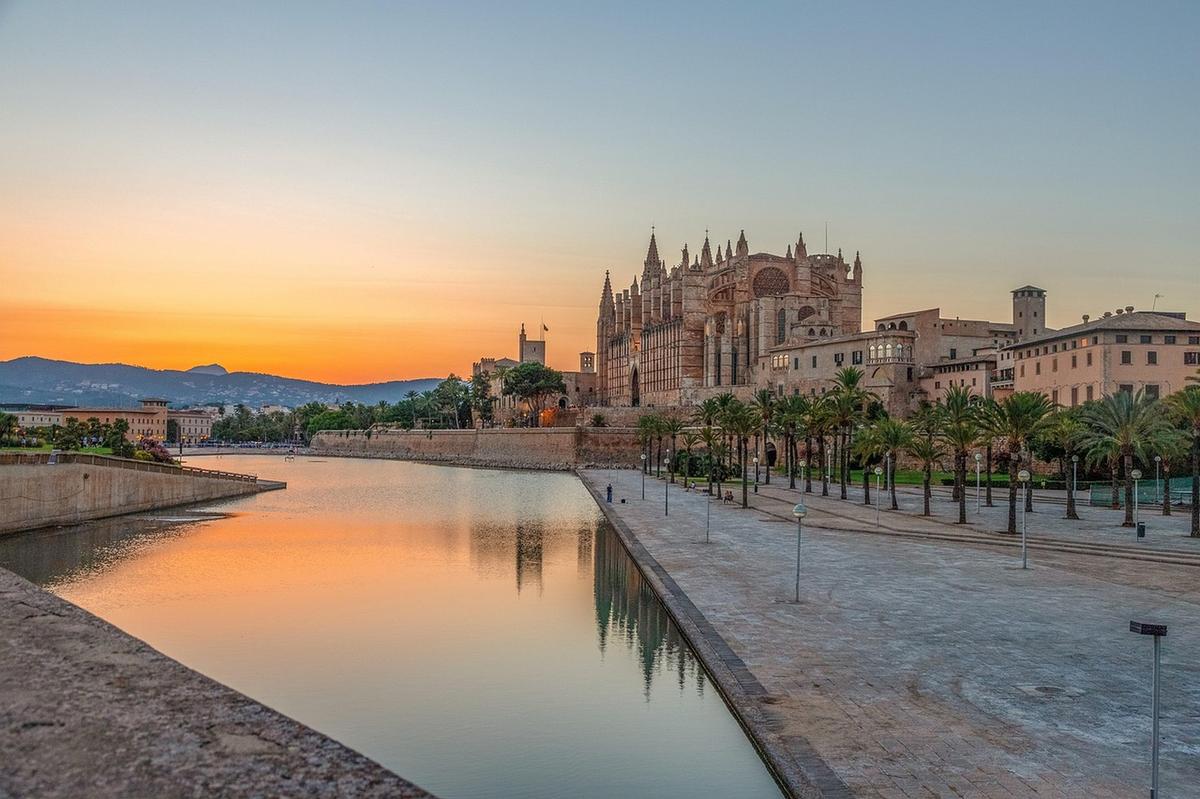
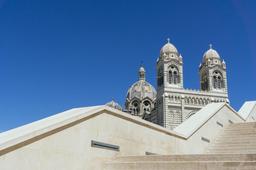
alma de Mallorca sits on the south coast of its island above a broad bay, a Mediterranean capital with mild winters and clean air that positions itself as the refined end of the Spanish island market. English is widely spoken; the international-school offer is modest but creditable; the old town's waterfront sets the register for everything else.
Palma suits remote workers who want a liveable European city without mainland Spain's scale, lifestyle-focused retirees drawn to mild winters and sea views, families who can work within a modest international-school offer, and food-driven travellers after the island's light-fresh kitchen. Healthcare is reliable and English-accessible.
Transit is the recurring friction—Palma runs on cars, and anyone expecting a walkable-to-everywhere European city will find the reality more dispersed than the old centre suggests. Costs sit noticeably above mainland Spain, which sharpens the income requirement. The tourism economy, concentrated and seasonal, shapes rental pricing and the centre's register in ways that take residents time to learn.
Find cities that fit you
A free quiz ranks all 343 cities against what matters to you.
Vibe and character
Palma moves at an unhurried Mediterranean register—late dinners in the old town, terraces active well past midnight, the Bay framing every outward view. Weekends dissolve into the island interior or short hops across the western Mediterranean. The dominant sensory note is sea light and early morning produce.
Source: UNESCO · Methodology
City character
Our estimate: city character ratings · Methodology
Cost
Palma de Mallorca's cost runs above the mid-size city median — $4,119 for a solo month, in the upper band but below the top tier. Housing prices across Palma de Mallorca hold within a narrow band — the practical effect is fewer cost-saving options through neighbourhood choice.
Source: Numbeo, collected November 2026, in our cost model · Methodology
These are recurring monthly costs. Moving itself — deposits, shipping, visas, flights, temporary accommodation — is not included, and it is usually the largest number in your first year. When grouped by region elsewhere on this site, North America covers the United States, Canada, and Mexico.
Monthly cost · by household
Priced for a Western-expat mid-range lifestyle — local-style living usually costs less.
All figures above are the Average lifestyle baseline for Palma de Mallorca — Western mid-range expat methodology, November 2026, line-by-line cost model. Want to model a different lifestyle? Use the widget below to swap household size, lifestyle tier, and quick toggles. It starts from the same Solo + Average baseline and diverges as you customize.
Run the full Cost Reality Check for Palma de Mallorca
Priced for your household and lifestyle tier, line by line. $79 one-time.
Where Palma de Mallorca sits globally
Above-average lifestyle costs by corpus standards.
Safety and rights
Safety scores moderate — 63 out of 100 — with opportunistic petty crime the most visible risk.
Sources: Numbeo, collected November 2026 · ILGA World · Georgetown GIWPS, 2023/24 · Freedom House · Methodology
Climate
The climate is hot semi-arid — Palma de Mallorca has no cold season to plan around, just a mild winter dip before the warmth returns. Rainfall is modest overall — October carries the peak at 73mm, while the driest months stay thin.
Sources: WMO / NOAA NCEI, normals 1991–2020, published 2023, checked Oct 2026 · ACAG SatPM2.5 (Washington University in St. Louis), 2021–2023 · Methodology
Our estimate: winter rating · Methodology
12-month temperature and rainfall
August is the hottest month at 30°C average highs; October brings the year's heaviest rainfall at 73 mm.
Season by season
Coolest months · Dec–Feb
The coolest stretch of the year — average highs around 17°C.
Hottest months · Jul–Sep
The warmest stretch of the year — average highs around 30°C.
Wettest months · Sep–Nov
The heaviest rainfall of the year — about 73 mm in the wettest month.
Healthcare
Healthcare quality in Palma de Mallorca is good across the everyday range — the better facilities set the standard, and quality is less uniform below them. English-language care is available in the larger private facilities, and the country's health system sets how care is organised.
Source: international insurers, 2024 · Methodology
Our estimate: healthcare quality and English-medium care · Methodology
Costs run moderate — insurance at $152 a month and out-of-pocket pricing below Western private rates.
Palma de Mallorca's public system is universally coordinated — long-stay residents register and receive care alongside citizens, with the private layer playing a supplementary role. The practical pattern for long-stay expats is public-first with private supplement — the public system handles the bulk of needs, private accelerates electives. Premiums for portable global cover sit well below US private-market levels, though the local universal system means most residents don't need it.
Systems, insurance and prescription rules are set nationally, not city by city. How healthcare abroad actually works
The quiz weights healthcare quality against your other priorities — climate, cost, language — to show where Palma de Mallorca stands. Get the full ranking · $99
Practical
Getting around Palma de Mallorca works at a functional standard — daily trips hold up, but with notable gaps that shape daily routines. Transit is constrained in Palma de Mallorca — limited routes mean public-transport-only living is impractical for most expats. Walking works in Palma de Mallorca's denser areas but loses utility outside the centre. Tap water is drinkable straight from the source — no household filtration or bottled supply needed.
Sources: OpenStreetMap contributors · EF EPI · Methodology
Our estimate: visa and admin, Western digital services · Methodology
Language
Spanish is Palma de Mallorca's main language, and the EF Index places the country's English proficiency in the Moderate band — variable in practice. In practice, English is workable in major hotels and central commercial districts but thins quickly elsewhere — most daily interactions outside the expat-facing layer require Spanish. Functional Spanish closes the gap rapidly — for any stay over a year, working knowledge becomes the practical baseline.
Mobility and connectivity
Palma de Mallorca's walkability is mixed — a walkability estimate of 55 captures the gap between central districts (pedestrian-friendly) and outer areas (vehicle-priority). Public transport in Palma de Mallorca is constrained — limited rail and a thin bus network make transit useful for certain routes but inadequate as the primary mode. Ride-hailing is broadly available in Palma de Mallorca at mid-band prices — typical trips around $9, with the cost being noticeable but not prohibitive.
Transit scores count only transit with its own dedicated right-of-way — metro, elevated and underground rail, trams on dedicated lines, and fully separated busways (BRT). Buses and trams sharing regular car lanes don’t count, however frequent.
Visa pathways
Spain's long-stay framework is among the more welcoming in the Schengen zone. The Digital Nomad Visa (Visado para Teletrabajadores) targets remote professionals earning from abroad; the Non-Lucrative Visa suits retirees and those with passive income willing to forgo employment; and the Entrepreneur Visa is open to founders with a credible business plan endorsed by a Spanish authority. All three lead toward permanent residency.
Visa pathways and admin ratings shown here are for the principal applicant — spouse and dependant work rights vary by pathway; check the linked official source before relying on them.
Minority faith infrastructure
Mosques — few.
We record mosques, synagogues, Buddhist temples and Hindu temples — the ones hardest to assume from a country's majority religion — and show whichever are present here. Christian places of worship are not recorded; in most of the corpus they are the default rather than the question.
The quiz weights admin complexity against your situation to show where Palma de Mallorca stands. Get the full ranking · $99
Schools
International schooling in Palma de Mallorca is moderately developed — 6 schools run international curricula, of which 3 carry an IB programme, covering most major Anglophone and Continental-European options. Palma de Mallorca's international tuition averages $14,088 a year — solidly mid-market by global standards, with premium institutions well above and mid-tier alternatives below.
Our estimate: school counts · Methodology
Tuition: Estimated — no published price found.
International schooling in Palma de Mallorca is moderately developed — 6 schools across the main Anglosphere and Continental-European curricula serve the expat community. Palma de Mallorca's 6 international-curriculum schools cover the major Anglosphere, Continental-European, and IB curricula, of which 3 carry an IB programme, with reasonable curriculum range for typical expat needs. Tuition averages $14,088 a year across the system, with a wide spread — premium schools run several multiples of the average and smaller mid-market schools sit well below the mean.
The tier below international schools is well-developed — Spanish-English bilingual options at lower tuition, with strong representation across price tiers. Most family profiles find a fit in Palma de Mallorca, with the practical constraint usually budget calibration or specific curriculum continuity rather than availability.
The quiz weights school availability against your other priorities — climate, cost, language, healthcare — to rank Palma de Mallorca against other cities with comparable school depth. Compare the free and full quiz
Sources
- Numbeo, collected November 2026, in our cost model: monthly costs, cost rank
- WMO / NOAA NCEI, normals 1991–2020, published 2023, checked Oct 2026: climate type and temperatures, muggy months
- Numbeo, collected November 2026: safety index
- Freedom House: political freedom
- EF EPI: English proficiency
- UNESCO: World Heritage sites
- ILGA World: LGBTQ+ rights
- Georgetown GIWPS, 2023/24: women’s safety
- ACAG SatPM2.5 (Washington University in St. Louis), 2021–2023: air quality
- international insurers, 2024: health insurance
- OpenStreetMap contributors: walk and transit scores
Data last reviewed October 2026
The Palma de Mallorca decision pack.
Includes Find My City (every city that clears your non-negotiables, ranked) and the Cost Reality Check for Palma de Mallorca. One-time payment.
Similar to Palma de Mallorca

Our estimate: food and weekend chips · Methodology
Find cities that fit you
A free quiz ranks all 343 cities against what matters to you.