South America · Brazil
Rio de Janeiro
The geography earns its mythology—ocean, mountains, carnival heat—while the safety calculus runs as a separate map, measured strictly by neighbourhood.
Solo $2,010/mo · Couple $2,858/mo · Data as of November 2026
Our estimate: energy and cuisine · Methodology
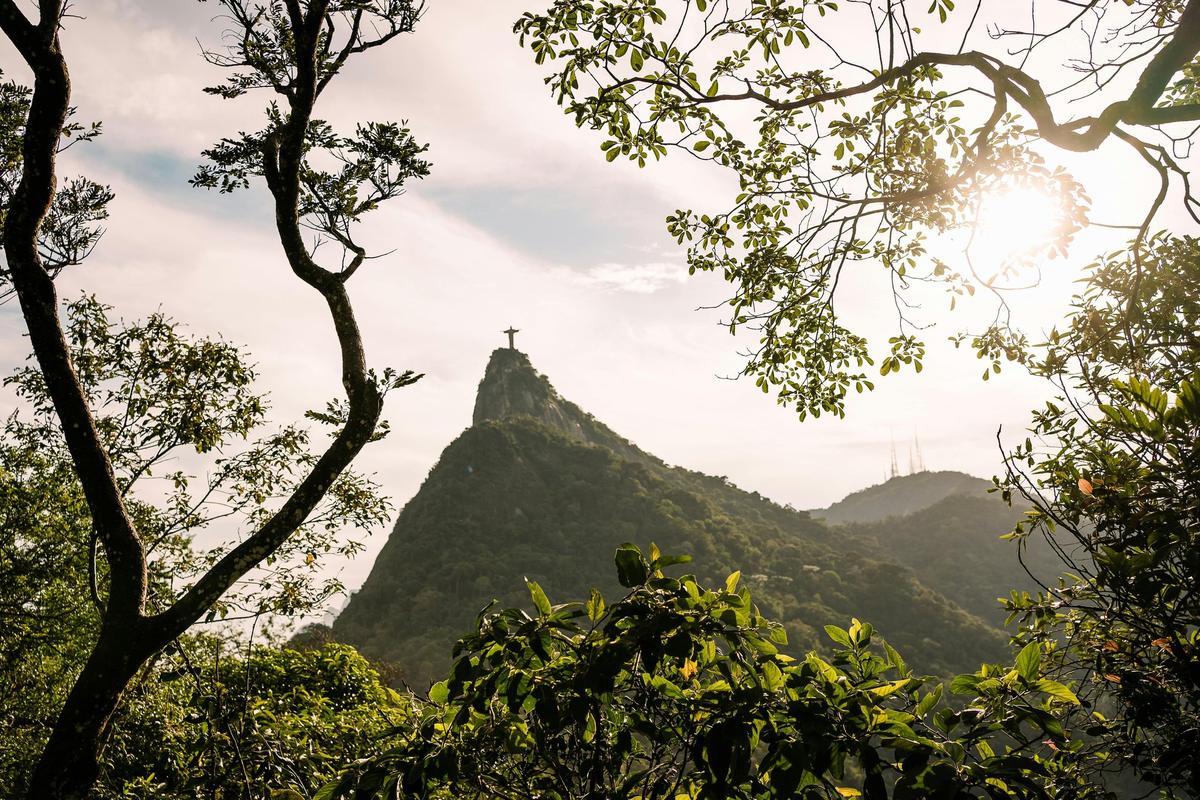
io de Janeiro spreads between Atlantic beaches and forested mountain slopes, warm and humid through most of the year. Portuguese is the working language; English carries you through tourist zones but loses traction fast inland. Living costs are modest by global megacity standards, and healthcare handles serious care well.
Rio suits budget-conscious remote workers and creatives who prize ocean and mountain access above urban polish. Food-driven travellers find a culinary scene that runs deep into neighbourhood restaurants and street markets well beyond the tourist strip. Families can source a workable range of internationally accredited schools, and retirees who weight climate and cost over language ease tend to find something durable here.
The constraints accumulate: safety is real and sharply neighbourhood-dependent, demanding careful postcode decisions and daily routing awareness; the city is not built for walking; English disappears outside tourist and expat corridors; and tap water requires filtering throughout. Individually none is unusual for a megacity in this region—together they set a threshold for how much friction a prospective resident is prepared to absorb.
Find cities that fit you
A free quiz ranks all 343 cities against what matters to you.
Vibe and character
Rio runs late and loud, its energy calibrated somewhere between beach afternoon and midnight street party. The culinary scene is textured and eclectic—charcoal-grilled meat alongside fresh ceviches, open-air counters serving cold beer into the early hours. Weekends spill toward the mountains or the coast.
Source: UNESCO · Methodology
City character
Our estimate: city character ratings · Methodology
Cost
Rio de Janeiro sits in the lower band of megacity cost — $2,010 solo, cheap for the scale of city you're getting. The internal spread is moderate: prime central rents run two to three times the outside-of-centre equivalent, with meaningful but not transformative budget flexibility through location choice.
Source: Numbeo, collected November 2026, in our cost model · Methodology
These are recurring monthly costs. Moving itself — deposits, shipping, visas, flights, temporary accommodation — is not included, and it is usually the largest number in your first year. When grouped by region elsewhere on this site, North America covers the United States, Canada, and Mexico.
Monthly cost · by household
Priced for a Western-expat mid-range lifestyle — local-style living usually costs less.
All figures above are the Average lifestyle baseline for Rio de Janeiro — Western mid-range expat methodology, November 2026, line-by-line cost model. Want to model a different lifestyle? Use the widget below to swap household size, lifestyle tier, and quick toggles. It starts from the same Solo + Average baseline and diverges as you customize.
Run the full Cost Reality Check for Rio de Janeiro
Priced for your household and lifestyle tier, line by line. $79 one-time.
Where Rio de Janeiro sits globally
Cost-of-living runs at the low end of the corpus.
Safety and rights
Rio de Janeiro reads at 25 on safety. The neighbourhood-dependent profile means the citywide score understates the safest districts and overstates the safest hours.
Sources: Numbeo, collected November 2026 · ILGA World · Georgetown GIWPS, 2023/24 · Freedom House · Methodology
Climate
Rio de Janeiro runs warm to hot year-round — tropical savanna, no genuine winter season, with average highs of roughly 26–32°C through the year. The pattern splits into wet and dry: a rainy season peaking in January gives way to markedly drier months.
Sources: INMET, normals 1981–2010, checked Oct 2026 · NOAA NCEI Integrated Surface Database, 2016–2020, checked Oct 2026 · ACAG SatPM2.5 (Washington University in St. Louis), 2021–2023 · Methodology
Our estimate: winter rating · Methodology
12-month temperature and rainfall
Peak heat in February at 32°C average highs; peak rainfall in January at 172 mm.
Sunshine hours: not available for this city
Season by season
Coolest months · Jun · Jul · Sep
The coolest stretch of the year — average highs around 26°C.
Hottest months · Jan–Mar
Peak heat — average highs around 32°C. Outdoor activity tends to shift to mornings and evenings.
Wettest months · Jan · Mar · Dec
The heaviest rainfall of the year — about 172 mm in the wettest month.
Healthcare
Rio de Janeiro carries good healthcare for daily medicine — the typical expat caseload is handled locally, with referrals to specialist centres when needed. English is widely available in the major private hospitals, and access runs through the country's health system.
Source: international insurers, 2024 · Methodology
Our estimate: healthcare quality and English-medium care · Methodology
Insurance runs $152 a month for basic cover, with the broader cost picture moderate by developed-world standards.
Public healthcare in Rio de Janeiro runs on a national scheme covering Brazil citizens; expats have access on a fee basis but in practice rely primarily on the private system. Expats and the local middle class default to private medicine — the public sector is used in emergencies but rarely chosen for routine care. Premiums for global-portability cover sit comfortably below US private-market rates — accessible pricing for the option of treatment back home or elsewhere.
Systems, insurance and prescription rules are set nationally, not city by city. How healthcare abroad actually works
The quiz weights healthcare quality against your other priorities — climate, cost, language — to show where Rio de Janeiro stands. Get the full ranking · $99
Practical
Getting around Rio de Janeiro is well-developed — daily trips work reliably, with the gaps where they exist being inconveniences rather than constraints. Transit in Rio de Janeiro is well-developed — high network coverage and frequency support daily life without need for a car. Walking is a constrained mode. Tap water is not generally drunk straight from the tap — filtration systems or bottled water are the daily practice across Rio de Janeiro.
Sources: OpenStreetMap contributors · EF EPI · Methodology
Our estimate: visa and admin, Western digital services · Methodology
Language
The main language of Rio de Janeiro is Portuguese, and the EF Index rates the population in the Low band on English — how far English carries depends heavily on the neighbourhood and the service. In practice, English is functional in central expat districts, hotels, hospitals, and most private-sector services, and thins quickly in purely Portuguese-residential neighbourhoods. Portuguese ability makes a real difference for multi-year residents — the English-only experience tends to stay within the expat-facing side of Rio de Janeiro.
Mobility and connectivity
Rio de Janeiro's walkability is limited — a walkability estimate of 35 reflects an urban form built around vehicles, with pedestrian infrastructure varying sharply by neighbourhood. Public transit in Rio de Janeiro is strong — a well-developed network covers the major districts reliably, with high frequency on core routes. Ride-hailing is affordable and widely available — at $5 per typical trip, frequent use is practical for most expat budgets.
Transit scores count only transit with its own dedicated right-of-way — metro, elevated and underground rail, trams on dedicated lines, and fully separated busways (BRT). Buses and trams sharing regular car lanes don’t count, however frequent.
Visa pathways
Brazil offers three long-stay routes: the VITEM XIV Digital Nomad Visa for remote workers earning outside the country, the Pensionado Visa for retirees with passive income, and the Investor Visa for qualifying investors seeking a more direct path to permanent residency. Visa-free entry varies by passport; US, Canadian, and Australian citizens now require an eVisa.
Visa pathways and admin ratings shown here are for the principal applicant — spouse and dependant work rights vary by pathway; check the linked official source before relying on them.
Minority faith infrastructure
Mosques — moderate · Synagogues — moderate · Buddhist temples — few.
We record mosques, synagogues, Buddhist temples and Hindu temples — the ones hardest to assume from a country's majority religion — and show whichever are present here. Christian places of worship are not recorded; in most of the corpus they are the default rather than the question.
The quiz weights admin complexity against your situation to show where Rio de Janeiro stands. Get the full ranking · $99
Schools
International schooling in Rio de Janeiro is well-developed but not deep — 20 schools run international curricula, of which 4 carry an IB programme, with the practical constraint usually budget rather than availability. Rio de Janeiro's tuition picture averages $15,072 a year — mid-market by global standards, with most families finding viable options without venturing into the premium tier.
Our estimate: school counts · Methodology
Tuition: Estimated — no published price found.
The international-school sector in Rio de Janeiro is solidly developed — 20 schools cover the typical expat needs with capacity and curriculum range comparable to peer South American cities. Curriculum variety is reasonably broad — the 20 schools span British, American, IB, and Continental-European providers, of which 4 carry an IB programme, accommodating most expat family needs. Tuition runs $15,072 a year on average — sits in the broad middle of global expat-school pricing, with premium institutions well above and mid-tier alternatives below.
The tier below international schools is well-developed — Portuguese-English bilingual options at lower tuition, with strong representation across price tiers. Most family profiles find a fit in Rio de Janeiro, with the practical constraint usually budget calibration or specific curriculum continuity rather than availability.
The quiz weights school availability against your other priorities — climate, cost, language, healthcare — to rank Rio de Janeiro against other cities with comparable school depth. Compare the free and full quiz
Sources
- Numbeo, collected November 2026, in our cost model: monthly costs, cost rank
- INMET, normals 1981–2010, checked Oct 2026: climate type and temperatures
- Numbeo, collected November 2026: safety index
- Freedom House: political freedom
- EF EPI: English proficiency
- UNESCO: World Heritage sites
- ILGA World: LGBTQ+ rights
- Georgetown GIWPS, 2023/24: women’s safety
- NOAA NCEI Integrated Surface Database, 2016–2020, checked Oct 2026: muggy months
- ACAG SatPM2.5 (Washington University in St. Louis), 2021–2023: air quality
- international insurers, 2024: health insurance
- OpenStreetMap contributors: walk and transit scores
Data last reviewed October 2026
The Rio de Janeiro decision pack.
Includes Find My City (every city that clears your non-negotiables, ranked) and the Cost Reality Check for Rio de Janeiro. One-time payment.
Similar to Rio de Janeiro

Our estimate: food and weekend chips · Methodology
Find cities that fit you
A free quiz ranks all 343 cities against what matters to you.