East Asia · Japan
Kyoto
A city of temple gardens and lacquered ceremony where the cultural inheritance is immense and the English-language infrastructure is almost nowhere.
Solo $2,623/mo · Couple $3,834/mo · Data as of November 2026
Our estimate: energy and cuisine · Methodology
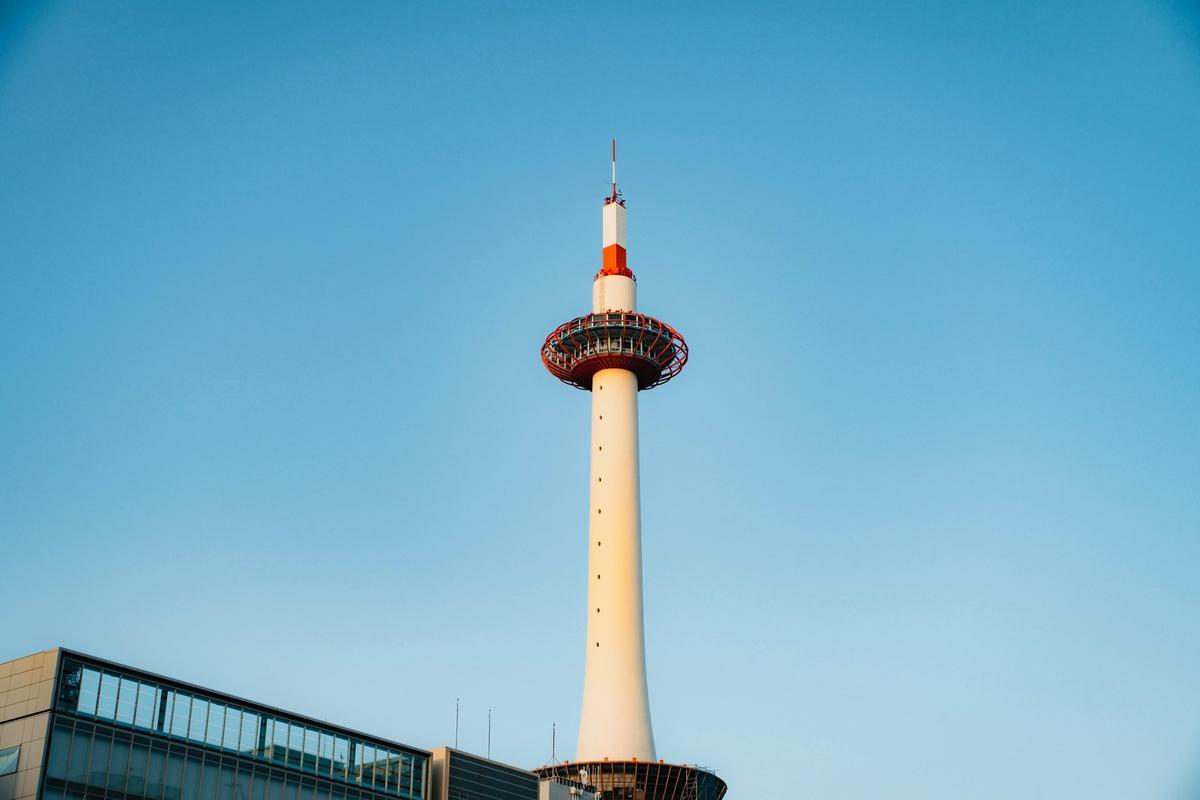
yoto spreads across a hill-ringed basin in the Kansai region—a former imperial capital of temple districts, narrow lanes, and traditional heritage. Costs run moderate by Japanese standards. Japanese is the sole working language, the international-school market is thin, and healthcare quality overall is excellent.
Kyoto suits remote workers who prize safety and clean air in a city that leaves them largely undisturbed. Culture-driven long-term residents—writers, designers, researchers drawn to Japanese material culture—find depth that few cities match. Excellent facilities serve healthcare-focused retirees.
The language is where Kyoto tests nearly everyone: English penetration is low across the city, including in medical settings, and the expat infrastructure that smooths arrival elsewhere is thin. Families with school-age children face a limited international-school market. Summer arrives with genuine force—weeks of high humidity that newcomers from temperate climates consistently underestimate.
Find cities that fit you
A free quiz ranks all 343 cities against what matters to you.
Vibe and character
Kyoto moves at a measured pace: ordered streets, quiet lanes behind the temple circuits, evenings that close earlier than most large cities. Lunches arrive in lacquered boxes, dinners run refined and unhurried; weekends escape easily toward Osaka, Kobe, or the mountains. The sensory register is one of precision and ceremony.
Source: UNESCO · Methodology
City character
Our estimate: city character ratings · Methodology
Cost
$2,623 for a solo month — Kyoto runs mid-band by large-city standards, typical for its tier. The internal spread is moderate: prime central rents run two to three times the outside-of-centre equivalent, with meaningful but not transformative budget flexibility through location choice.
Source: Numbeo, collected November 2026, in our cost model · Methodology
These are recurring monthly costs. Moving itself — deposits, shipping, visas, flights, temporary accommodation — is not included, and it is usually the largest number in your first year. When grouped by region elsewhere on this site, North America covers the United States, Canada, and Mexico.
Monthly cost · by household
Priced for a Western-expat mid-range lifestyle — local-style living usually costs less.
All figures above are the Average lifestyle baseline for Kyoto — Western mid-range expat methodology, November 2026, line-by-line cost model. Want to model a different lifestyle? Use the widget below to swap household size, lifestyle tier, and quick toggles. It starts from the same Solo + Average baseline and diverges as you customize.
Run the full Cost Reality Check for Kyoto
Priced for your household and lifestyle tier, line by line. $79 one-time.
Where Kyoto sits globally
Sits in the mid-band of corpus lifestyle costs.
Safety and rights
Day-to-day safety in Kyoto is consistently strong — 86 out of 100, uniform across hours and parts of town, with no neighbourhood-specific risk worth flagging.
Sources: Numbeo, collected November 2026 · ILGA World · Georgetown GIWPS, 2023/24 · Freedom House · Methodology
Climate
Kyoto runs humid subtropical with a cool winter — summers peaking around 34°C, winter lows bottoming out near 2°C, year-round precipitation. The seasonal pattern is humid-subtropical four-season — summer heat, autumn cooling, winter mild to cold, spring damp and warming, with August the hottest and July the wettest.
Sources: JMA, normals 1991–2020, checked Oct 2026 · Copernicus Climate Change Service (ERA5), dataset cited 2023, means for 1991–2020, checked Oct 2026 · ACAG SatPM2.5 (Washington University in St. Louis), 2021–2023 · Methodology
Our estimate: winter rating · Methodology
12-month temperature and rainfall
August runs hottest (34°C average highs); July brings the heaviest rain (224 mm).
Sunshine hours: not available for this city
Season by season
Coolest months · Dec–Feb
The coolest stretch of the year — average highs around 9°C.
Hottest months · Jul–Sep
Peak heat — average highs around 34°C. Outdoor activity tends to shift to mornings and evenings.
Wettest months · Jun · Jul · Sep
The heaviest rainfall of the year — about 224 mm in the wettest month.
Healthcare
Excellent healthcare is the baseline in Kyoto — coverage is universal, with private options as supplement rather than substitute. English in healthcare runs moderate — workable at the top, sparser below, and the country's health system sets how care is organised.
Source: international insurers, 2024 · Methodology
Our estimate: healthcare quality and English-medium care · Methodology
Healthcare costs are reasonable by developed-world standards — basic local insurance at $200 a month, with international-portable cover available at a premium.
The public system provides universal coverage in Kyoto — long-stay expats typically register and rely on it for primary and emergency care. Most expats rely on the public system after registration — private medicine is supplementary rather than essential, used for specific specialists or elective speed. International-portable cover is competitively priced — typically a fraction of US private plans — but for residents the public system usually covers what international cover would.
Systems, insurance and prescription rules are set nationally, not city by city. How healthcare abroad actually works
The quiz weights healthcare quality against your other priorities — climate, cost, language — to show where Kyoto stands. Get the full ranking · $99
Practical
Kyoto's mobility is solid — with one or two parts sitting below the top tier. Public transit covers the central spine well. Walking works as the default mode — a pedestrian-prioritised street network supports daily life on foot. Tap water is drinkable straight from the source — no household filtration or bottled supply needed.
Sources: OpenStreetMap contributors · EF EPI · Methodology
Our estimate: visa and admin, Western digital services · Methodology
Language
Japanese is Kyoto's main language and EF places the country's English at the Very Low band — though in major expat contexts English handles most interactions despite the population-wide statistics. English access is thin — even major commercial and government contexts often require translation, with reliable English limited to the most international-facing settings. Japanese ability is operationally critical for multi-year residents — without it, daily life remains constrained to international-facing infrastructure.
Mobility and connectivity
Walking is the default mode in Kyoto — at walkability 88, pedestrian-priority planning at the city-block level supports living almost entirely on foot. At transit score 66, Kyoto's transit network reaches most expat districts reliably, with broader-area coverage thinner.
Transit scores count only transit with its own dedicated right-of-way — metro, elevated and underground rail, trams on dedicated lines, and fully separated busways (BRT). Buses and trams sharing regular car lanes don’t count, however frequent.
Visa pathways
Japan's long-stay landscape is narrow but structured. The Digital Nomad Visa (Designated Activities) offers a short, non-renewable window for higher-earning professionals; the Highly Skilled Professional Visa suits credentialed workers through a points system tied to employer sponsorship; the Investor/Business Manager Visa requires actively running a company. Visa-free entry is generous, though remote work on tourist status remains legally ambiguous.
Visa pathways and admin ratings shown here are for the principal applicant — spouse and dependant work rights vary by pathway; check the linked official source before relying on them.
Minority faith infrastructure
Mosques — few · Buddhist temples — very many.
We record mosques, synagogues, Buddhist temples and Hindu temples — the ones hardest to assume from a country's majority religion — and show whichever are present here. Christian places of worship are not recorded; in most of the corpus they are the default rather than the question.
The quiz weights admin complexity against your situation to show where Kyoto stands. Get the full ranking · $99
Schools
International schooling in Kyoto sits at moderate depth — 10 schools cover most curriculum needs, of which 5 carry an IB programme, with capacity meaningful at the established institutions and tighter at premium ones. Kyoto's international tuition averages $12,399 a year — solidly mid-market by global standards, with premium institutions well above and mid-tier alternatives below.
Our estimate: school counts · Methodology
Tuition: Estimated — no published price found.
International schooling in Kyoto is moderately sized by East Asian standards — 10 schools serve the expat community, smaller than Tokyo or Hong Kong but covering all major curriculum types. Kyoto's 10 international-curriculum schools cover the major Anglosphere, Continental-European, and IB curricula, of which 5 carry an IB programme, with reasonable curriculum range for typical expat needs. At $12,399 a year on average, Kyoto's international tuition is mid-band by global standards — comparable to similar expat-hub cities and well below the premium tier of Singapore, London, or New York.
Below the international tier sits a strong Japanese-medium school system — high-quality state education that integration-oriented families consider viable for longer horizons. Most expat families find a workable fit in Kyoto — the question is usually budget calibration and curriculum match rather than absence of options.
The quiz weights school availability against your other priorities — climate, cost, language, healthcare — to rank Kyoto against other cities with comparable school depth. Compare the free and full quiz
Sources
- Numbeo, collected November 2026, in our cost model: monthly costs, cost rank
- JMA, normals 1991–2020, checked Oct 2026: climate type and temperatures
- Numbeo, collected November 2026: safety index
- Freedom House: political freedom
- EF EPI: English proficiency
- UNESCO: World Heritage sites
- ILGA World: LGBTQ+ rights
- Georgetown GIWPS, 2023/24: women’s safety
- Copernicus Climate Change Service (ERA5), dataset cited 2023, means for 1991–2020, checked Oct 2026: muggy months
- ACAG SatPM2.5 (Washington University in St. Louis), 2021–2023: air quality
- international insurers, 2024: health insurance
- OpenStreetMap contributors: walk and transit scores
Data last reviewed October 2026
The Kyoto decision pack.
Includes Find My City (every city that clears your non-negotiables, ranked) and the Cost Reality Check for Kyoto. One-time payment.
Similar to Kyoto
Our estimate: food and weekend chips · Methodology
Find cities that fit you
A free quiz ranks all 343 cities against what matters to you.